

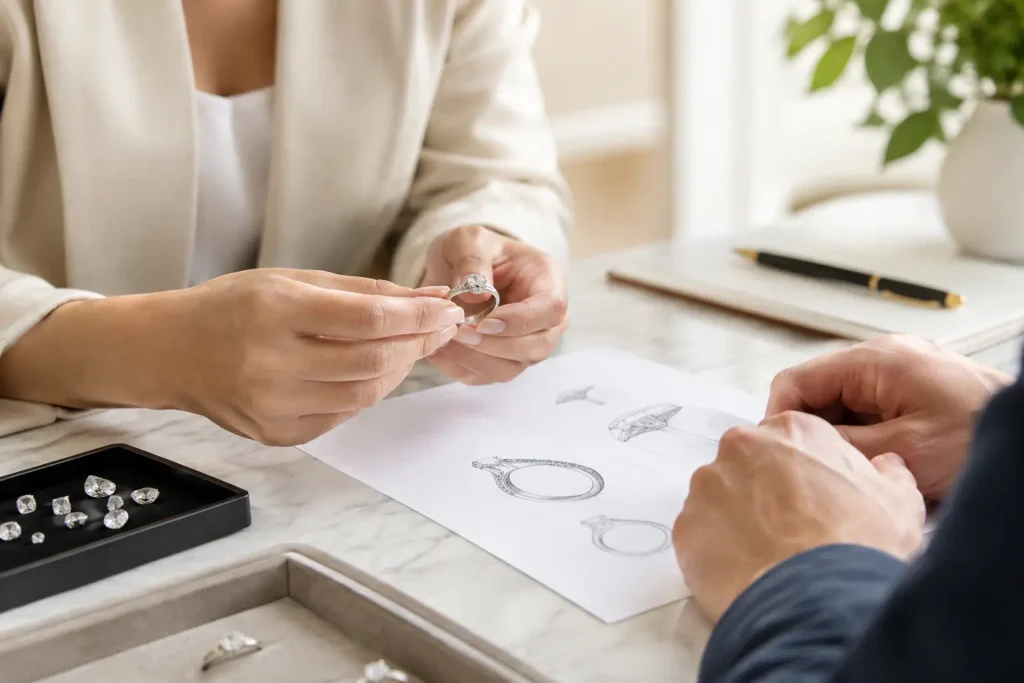
A wedding ring may be small, but it carries an extraordinary amount of meaning. It is worn through ordinary mornings, celebrations, holidays and every chapter that follows. That is why the bespoke ring process should feel considered, calm and genuinely personal, not like a rushed decision made from a tray of near-enough options.
For many couples, the starting point is a practical one: finding a wedding band that sits comfortably beside an engagement ring. For others, it is about creating a design no one else will have, honouring a family stone, or adding an engraving that quietly belongs to the two of you. Whatever brings you to bespoke jewellery, the process is simply a conversation guided by skilled hands.
What makes a ring truly bespoke?
A bespoke ring is designed around you rather than selected from existing stock. You might arrive with a clear picture, a folder of reference images, a much-loved engagement ring, or only a feeling about what you want the finished piece to represent. All are useful starting points.
The difference is in the detail. The width can be adjusted to suit your hand. The profile can be softly rounded, flat, sculpted or something in between. The metal can be chosen for its colour, durability or connection to another piece of jewellery. If your engagement ring has an unusual setting, a shaped wedding band can be designed to follow its contours rather than leaving an awkward gap.
Bespoke does not have to mean elaborate. A beautifully made plain band with the right proportions, finish and comfort fit can be every bit as personal as a diamond-set design. It is about making deliberate choices, not adding detail for detail’s sake.
The bespoke ring process, step by step
Begin with your story and practical needs
The first conversation is not a test of jewellery knowledge. It is a chance to talk about what you love, what you wear day to day and how you would like your ring to feel. If you have an engagement ring already, bring it along where possible. Seeing it in person allows the jeweller to assess the setting, height, shape and space around the band.
Photographs are helpful too, especially at the early stages. Reference images can communicate a preference for delicate milgrain edges, a particular band shape, a mixed-metal look or a more contemporary finish. They are a starting point rather than a design to copy exactly. The most successful bespoke rings take inspiration from what you love and make it work for your hand, your engagement ring and your lifestyle.
This is also the right moment to be open about budget. A good bespoke experience includes clear guidance about which decisions have the greatest effect on cost. Metal choice, ring width, stone size, setting style and the complexity of a shaped band all matter. A smaller design adjustment can often protect the character of the ring while bringing it into a comfortable price range.
Choose metal, shape and proportions
Once the design direction feels right, the details begin to take shape. Yellow gold offers warmth and a classic look, while white gold has a bright, polished appearance and platinum is valued for its naturally white colour and lasting strength. Rose gold brings a softer tone, and mixed metals can create a subtle connection between two rings.
There is no universally best metal. Platinum may suit someone looking for a weightier feel and a naturally white finish, while gold may be preferred for its warmth, colour options and tradition. Your existing engagement ring, work, hobbies and desired budget all play a part in the decision.
The shape of the band matters just as much. A court-shaped ring is rounded on the inside and outside, while a flat or bevelled profile gives a cleaner, more architectural feel. Width deserves careful attention too. A narrow band can look refined and delicate, but it may need enough substance to feel balanced next to a larger engagement ring. A wider band makes more of a statement, though it can feel different between the fingers. Trying proportions and discussing comfort honestly is far more useful than following a trend.
Design a perfect fit around an engagement ring
A shaped-to-fit wedding ring is often the reason couples choose a bespoke service. Engagement rings with low settings, prominent stones, oval or pear-shaped centres, halos or distinctive shoulders do not always sit neatly beside a straight band. Forcing a standard ring to work can leave a visible gap or cause the rings to rub.
Instead, the wedding band can be carefully shaped around the engagement ring. This may mean a gentle curve, a deeper wishbone, a soft wave or a design that mirrors the line of the setting. The goal is not just to make the rings touch. It is to create a pair that looks intentional and feels comfortable when worn together.
There is a trade-off worth discussing. A tightly fitted shaped band is designed around one engagement ring and may not sit in the same way if you later wear it alone. Some people love that sense of a matched set; others want a band with enough versatility to wear independently. There is no wrong answer, only the choice that suits your life and how you imagine wearing your rings.
Add the details that carry meaning
This is where a ring becomes unmistakably yours. Engravings may include a wedding date, initials, a meaningful phrase, coordinates or a line in a shared language. They can be visible as part of the design or kept inside the band as a private detail.
Stone settings can add sparkle, but they should suit the way you live. Pavé diamonds create a fine, light-catching surface, while channel settings offer a more protected line of stones. A plain polished band may be ideal for someone who wants a low-maintenance design, while a brushed, hammered or satin finish can give a ring more texture and character.
Heirloom jewellery can also play a part. In some cases, family gold can be remade or a sentimental stone can be incorporated into a new piece. This needs expert assessment first, as not every material or stone is suitable for reuse. When it is possible, however, it can be a beautiful way to carry a family story forward in a design you will genuinely wear.
See the design before it is made
Before production begins, you should feel confident about what has been agreed. Depending on the design, this may involve drawings, measurements, sample rings, digital visuals or a model to confirm the shape. This stage is especially valuable for fitted wedding bands, as tiny changes in curve, depth and width can affect the final look beside an engagement ring.
Take time here. Ask whether the rings will sit flush, whether the diamonds are protected, how the metal will wear and whether the profile will feel comfortable every day. Bespoke jewellery is not about saying yes quickly. It is about reaching the point where the design feels right because it has been properly considered.
Handcrafting, fitting and final checks
Once the design is approved, the ring is made by skilled craftspeople. The work includes forming the metal, setting any stones, refining the edges, applying the chosen finish and checking every detail. A well-made ring should feel smooth against the skin, balanced on the hand and beautifully finished from every angle, including the ones only you will see.
The final fitting is an important moment. Fingers can change size with temperature, travel, exercise and the time of day, so a ring should be assessed for everyday comfort rather than a brief perfect fit. Your jeweller can advise on the best size and explain what is possible if future resizing is ever needed. Certain full-set diamond bands and highly shaped designs can have limitations, which is helpful to understand before making a final choice.
Questions worth asking during your bespoke journey
A personal service should make questions feel welcome. Ask how the ring will sit with your engagement ring, what maintenance it may need, whether its design allows for resizing, and how the chosen finish will evolve with wear. If diamonds or gemstones are involved, ask about their sourcing and quality too.
It is also sensible to ask about timings early, particularly if you are working towards a wedding date. Bespoke work takes care and should not be hurried unnecessarily. Starting the conversation with time to make thoughtful choices is one of the kindest things you can do for yourselves.
At BWR London, each design begins with listening. Whether you have a complete vision, an engagement ring that needs a perfectly shaped companion, or a few saved images and no idea where to begin, you do not need to have every answer before starting.
Your wedding ring will become part of your everyday life very quickly. Give yourself the space to create one that feels comfortable, considered and completely at home beside the person and the promise it represents.