

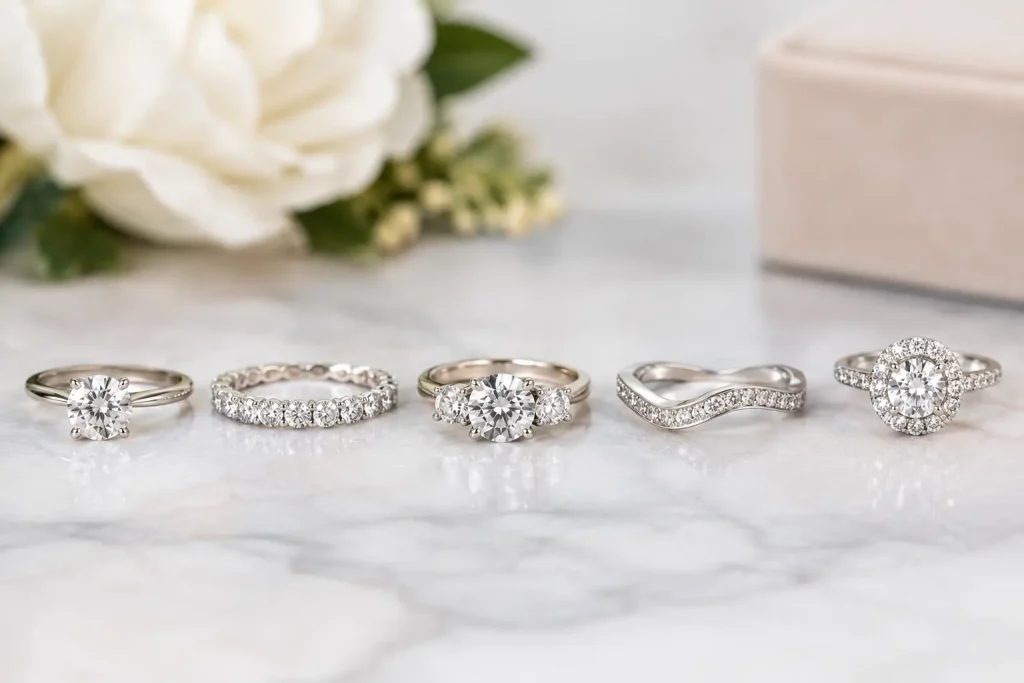
Your wedding band may be the ring you wear most, so its diamonds need to feel as good as they look. Diamond band settings determine how each stone catches the light, how secure it is during everyday wear, and whether the ring sits comfortably beside your engagement ring.
For some couples, the priority is a fine line of sparkle that leaves the engagement ring centre stage. For others, it is a bold diamond band with presence of its own. There is no single right answer – only the setting that reflects your style, suits your routine and works beautifully with the ring you already love.
What diamond band settings really change
A setting is the way diamonds are held in place within the metal of the ring. It affects far more than appearance. The amount of metal around each stone influences brightness, protection and texture, while the height of the setting can affect how easily it catches on knitwear, hair or gloves.
It also matters when you are matching a wedding band to an engagement ring. A low-set engagement ring may sit neatly against a slim pavé band, while a prominent centre stone or detailed basket may need a shaped band designed around it. Choosing the setting and the shape together avoids the disappointing gap that can happen with an off-the-shelf ring.
Pavé settings for a continuous sparkle
In a pavé setting, small diamonds are set closely together, held by tiny beads of metal. The result is a delicate, light-filled surface where the diamonds appear to cover the band. It is a popular choice for wedding rings because it can bring plenty of brilliance without adding too much width.
Pavé works especially well for those who like refined detail and want their band to complement, rather than compete with, an engagement ring. It can be made as a half-eternity style, with diamonds across the visible top of the ring, or extend further around the band for more sparkle.
The trade-off is that pavé has fine detail to look after. A well-made setting is secure, but small stones and beads should be checked periodically, particularly if you lead a very hands-on lifestyle. A half-set design can also be a practical choice if you want the diamonds on show but prefer a plain, easily resized section at the back.
Channel settings for a smooth finish
Channel-set diamonds sit between two raised edges of metal, creating a clean row with no individual claws visible. The diamonds are protected at both sides, and the finished surface feels smooth against neighbouring fingers.
This is an excellent option for someone who wants sparkle with a more structured, contemporary look. Channel settings are often reassuring for active wearers because the stone edges are less exposed. They can look particularly striking in wider bands, where there is room for a defined line of diamonds.
Because the metal frames the stones, a channel-set band may show slightly less of each diamond than a claw-set design. That is not a flaw – it is an aesthetic choice. If your priority is a neat, polished profile and everyday durability, it can be exactly the balance you are looking for.
Claw and shared-claw settings for maximum light
Claw-set diamonds are held by small prongs, allowing more light to reach the stone. This gives a crisp, classic brilliance and a lighter visual feel than settings with more metal. On a diamond wedding band, individual claws can create a traditional scalloped outline, while shared claws hold two adjacent diamonds at once for a closely set, elegant row.
This style is ideal if you are drawn to the look of distinct diamonds rather than a smooth strip of sparkle. It can be beautifully matched to an engagement ring with claw-set side stones or a raised solitaire.
Claws need thoughtful proportions. Too fine, and they may wear sooner; too heavy, and they can distract from the diamonds. They should also be finished smoothly, particularly on a shaped ring where comfort and clean alignment are essential. An experienced jeweller will design the setting around the diamond size, metal choice and the way you plan to wear the ring.
Diamond band settings that sit beside an engagement ring
The setting style is only one part of the fit. Before a wedding band is made, it helps to look closely at the engagement ring from the side, not just from above. Is the centre stone low in its setting? Does the gallery extend beneath it? Are there side stones, a halo, or an unusual-shaped centre diamond?
A straight band can be perfect when there is enough clearance. But if the engagement ring prevents it from sitting flush, forcing two straight rings together can place pressure on the settings and leave an awkward gap. A curved, notched or gently contoured band can follow the engagement ring precisely while still looking intentional when worn on its own.
For this reason, bespoke diamond band settings are often designed after assessing the engagement ring in person or from clear reference images and measurements. The curve, the diamond layout and the setting height can all be adjusted so the two rings meet comfortably. A fitted band should never feel like an afterthought.
Bezel and rub-over settings for protection
A bezel, often called a rub-over setting, wraps a fine rim of metal around the edge of each diamond. It creates a smooth, secure finish and offers excellent protection for stones that may otherwise be exposed.
Full bezels have a modern, graphic appearance, while partial bezels show more of the diamond from the sides. Both can be a wonderful choice for someone who works with their hands, prefers minimal snagging or simply loves a clean design. They also pair well with vintage-inspired engagement rings when finished with soft edges or subtle milgrain detail.
The diamonds may appear slightly more contained than they do in claw settings, but the design can feel wonderfully substantial and reassuring. It is about choosing the kind of beauty you will enjoy every day, not just the sparkle you see in a jewellery box.
Flush settings for understated diamonds
Flush-set diamonds are placed into the surface of the metal so they sit level with the band. They offer a discreet flash of light and a very smooth feel, making them a lovely option for a wedding ring intended for constant wear.
This setting is particularly suited to couples who want meaningful diamond details without a traditionally diamond-heavy look. A scattering of flush-set stones can represent special dates, family members or a private pattern known only to you. It is also a thoughtful way to incorporate diamonds from an heirloom piece, where appropriate after careful assessment of the stones.
Choosing the right metal, width and diamond layout
Setting choice does not happen in isolation. Platinum offers a naturally white appearance and a dense, durable feel, while yellow or rose gold can give a warmer contrast around white diamonds. The best choice often depends on the metal of your engagement ring, though mixed-metal stacks can look intentional and personal too.
Band width changes the character of a setting. Fine pavé can make a narrow band appear delicate and bright, whereas channel settings, flush diamonds and larger stones generally need more metal to look balanced. If you are planning to wear both rings together every day, consider the combined width as well as each ring individually.
Think about where you want the diamonds too. A half-eternity band is practical, easier to alter in many cases and keeps diamonds focused on the visible surface. A three-quarter or full-eternity design creates more continuous sparkle, but may be less straightforward to resize later. Your ring size, budget and future plans all deserve a place in that conversation.
Let comfort guide the final decision
The most beautiful diamond band setting is one you will still be pleased to wear years from now. Try to imagine ordinary moments: carrying shopping bags, getting ready for work, holding hands, cooking dinner and sleeping. A ring should feel like part of you, rather than something you are constantly aware of protecting.
At BWR London, a bespoke consultation gives you space to compare these details without pressure. Whether you have a clear design in mind, an engagement ring that needs a precise fitted curve, or just a saved image that captures the feeling you want, the design can begin there.
Bring your engagement ring, your questions and the small details that matter to you. The right diamond band will not only complete your bridal set – it will become a familiar, meaningful part of everyday life.