

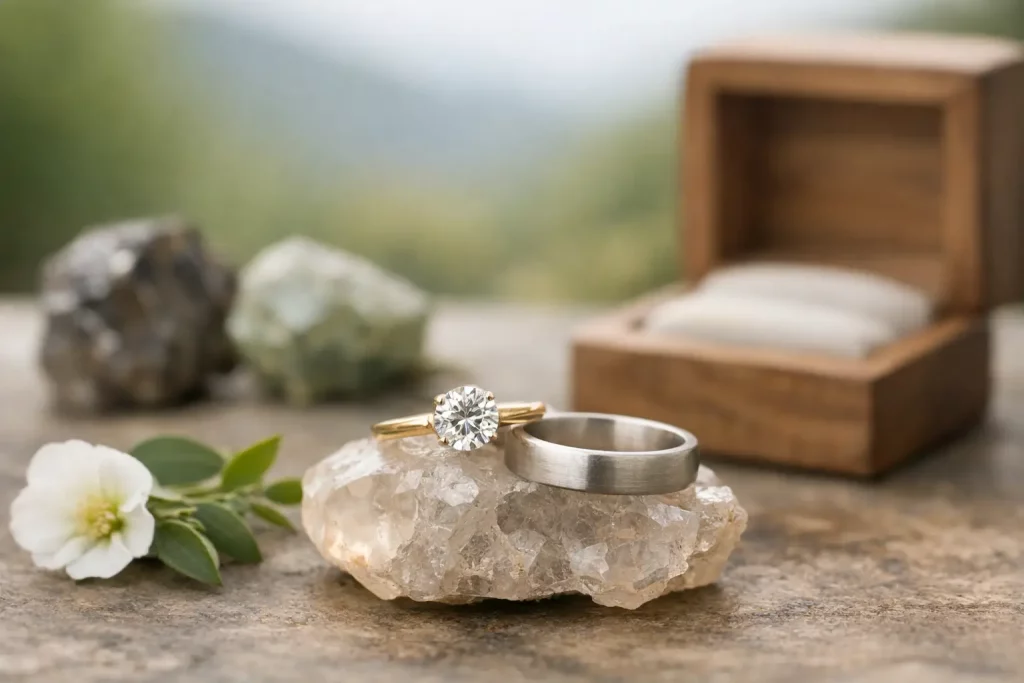
A wedding ring may be small, but it carries a remarkable amount of meaning. It is the piece you will reach for every morning, notice in photographs, and wear through ordinary Tuesdays as well as life’s biggest moments. If you are asking how to choose an ethical wedding ring, you are already thinking beyond the display cabinet – and that is a very good place to start.
An ethical ring is not defined by one material or a single label. It is about making considered choices: where the metal and stones come from, how clearly a jeweller can explain their supply chain, who makes the ring, and whether the finished piece is designed to be worn and cherished for decades. The best choice is one that aligns with your values, your style and the way your engagement ring fits your hand.
Start with what ethical means to you
Ethical jewellery can mean different things to different couples. For some, the priority is recycled precious metal. For others, it is traceable gemstones, a laboratory-grown diamond, fair mining practices, local craftsmanship, or reworking a family heirloom. You do not need to solve every issue in the jewellery industry before choosing your ring. You simply need to be clear about the questions that matter most to you.
It can help to choose two or three priorities before your consultation. Perhaps you would like recycled gold and a diamond with known provenance. Perhaps you want to preserve the story of a grandparent’s ring by using its gold or resetting its stones. Or perhaps you want to invest in a made-to-order wedding band because avoiding unnecessary stock and creating something lasting feels right for you.
A thoughtful jeweller should welcome these conversations. They should explain what they know, what documentation is available and where there may be limitations. Be wary of broad claims that sound reassuring but do not tell you anything specific about sourcing or production.
Choose a metal with a clear story
Gold, platinum and palladium can all be suitable choices for an ethical wedding ring. The right metal depends on your preferred colour, budget, lifestyle and the ring it will sit beside.
Recycled gold is a popular starting point. It uses gold that has already entered circulation, reducing the demand for newly mined material. Because gold is refined, recycled gold has the same quality and durability as newly mined gold. Ask whether the jeweller can confirm that the metal is recycled and whether they use an independently certified supplier.
If you would prefer newly mined gold with a stronger focus on responsible mining, ask about certified options such as Fairmined gold. Availability, colour and cost can vary, so it may not be the right fit for every design or budget, but a good jeweller can explain the practicalities clearly.
Platinum is naturally white, dense and wonderfully durable, which makes it a lovely choice for a ring worn every day. It is usually more expensive than gold because of its weight and rarity, while 9ct, 14ct and 18ct gold offer different balances of richness, strength and price. Ethical does not have to mean choosing the most expensive option. It means understanding your options and selecting one deliberately.
Consider the life of the ring, not just the material
A ring made to last is often the most meaningful choice. Look for a design with enough substance to withstand everyday wear, a finish that can be maintained, and a shape that feels comfortable from morning to night. A beautifully sourced material is only part of the story if the ring is too delicate, uncomfortable or poorly matched to the ring beside it.
This matters particularly for shaped wedding bands. If your engagement ring has a low-set centre stone, an unusual setting or a distinctive outline, a straight band can leave an awkward gap or rub against it. A shaped-to-fit ring can be designed around the engagement ring, helping both pieces sit comfortably and look as though they were always meant to belong together.
Ask the right questions about diamonds and gemstones
If your wedding ring will include diamonds or coloured stones, ask where they come from and what information accompanies them. Traceability is not always perfect, especially for very small stones, but a jeweller should be open about the level of provenance they can provide.
Natural diamonds and laboratory-grown diamonds can both be considered ethical choices, depending on your priorities. Laboratory-grown diamonds avoid mining and can offer excellent value for size and quality. Their environmental footprint, however, depends partly on the energy used to grow them. Natural diamonds have a geological history that many people love, but sourcing standards and traceability become especially important.
For coloured gemstones, ask whether the stone has been treated, whether its origin is known and whether the supplier follows recognised responsible sourcing practices. Vintage and reclaimed stones can also be a deeply personal option, giving an existing gem a new chapter rather than requiring a newly sourced one.
The goal is not to find a perfect answer with no complexity. It is to choose a stone with the clearest story available to you, from a maker willing to discuss it honestly.
How to choose an ethical wedding ring maker
The person making your ring matters as much as the materials in it. A bespoke wedding band is an opportunity to work with a specialist who listens to the details that can be missed in a hurried retail purchase: how your engagement ring sits, whether you work with your hands, what kind of profile feels comfortable, and which sentimental details you want close to you.
Ask whether the ring is made to order and where the work is carried out. Find out who will be your point of contact, how the design is approved and whether you will see drawings, samples or digital visuals before production begins. A one-to-one process gives you space to ask questions without feeling pushed towards a stock design that is almost right.
You may also want to ask about repairs, resizing and future care. No ring is entirely maintenance-free. White gold may need replating over time, stone settings should be checked periodically, and polished surfaces will gather fine marks from a well-lived life. A jeweller who talks openly about aftercare is showing that they expect your ring to stay with you for the long term.
Make customisation part of the ethical choice
Bespoke does not mean extravagant. It means the ring is made for you rather than chosen from a standard tray. That can be as simple as adjusting the width of a plain gold band, choosing a softer court profile, or creating a gentle curve to sit against your engagement ring.
It can also be more personal. A hidden engraving, a tiny birthstone, a fingerprint detail or gold from an inherited piece can turn a wedding band into something no one else could wear in quite the same way. If you are using heirloom jewellery, ask a specialist to assess it first. Some older pieces can be melted and remade, while others are better preserved by resetting their stones or taking design inspiration from their original details.
Be honest about your budget from the outset. A skilled jeweller can often suggest thoughtful alternatives – perhaps a narrower band, a simpler setting, recycled metal, or a design that uses fewer stones without losing its character. Your values should guide the design, not create pressure to spend beyond what feels comfortable.
Take time to check fit, finish and feeling
Before you approve a final design, think about your everyday life. A very wide band can feel different from a narrow one. A highly polished finish looks classic but shows surface marks more readily than a brushed or hammered finish. A diamond-set ring needs a setting appropriate for your routine, especially if you are often active or hands-on at work.
Most importantly, try the wedding ring with your engagement ring whenever possible. Look at them from every angle, not only face-on. Notice whether they sit flush, whether one pushes the other out of position, and whether the combined width feels comfortable. Reference images are useful, but your own ring provides the most accurate starting point for a made-to-fit design.
At BWR London, that personal fit is at the heart of the process. A photograph of your engagement ring, an inherited piece, or simply an idea you cannot quite sketch yet can become the beginning of a conversation with someone who understands how to turn it into a ring that feels right.
An ethical wedding ring should never feel like a compromise between your principles and your taste. Give yourself permission to ask detailed questions, take your time and choose the design that feels good on your hand as well as in your heart. The most lasting rings are made with care, worn with comfort, and filled with a story you are proud to carry.