

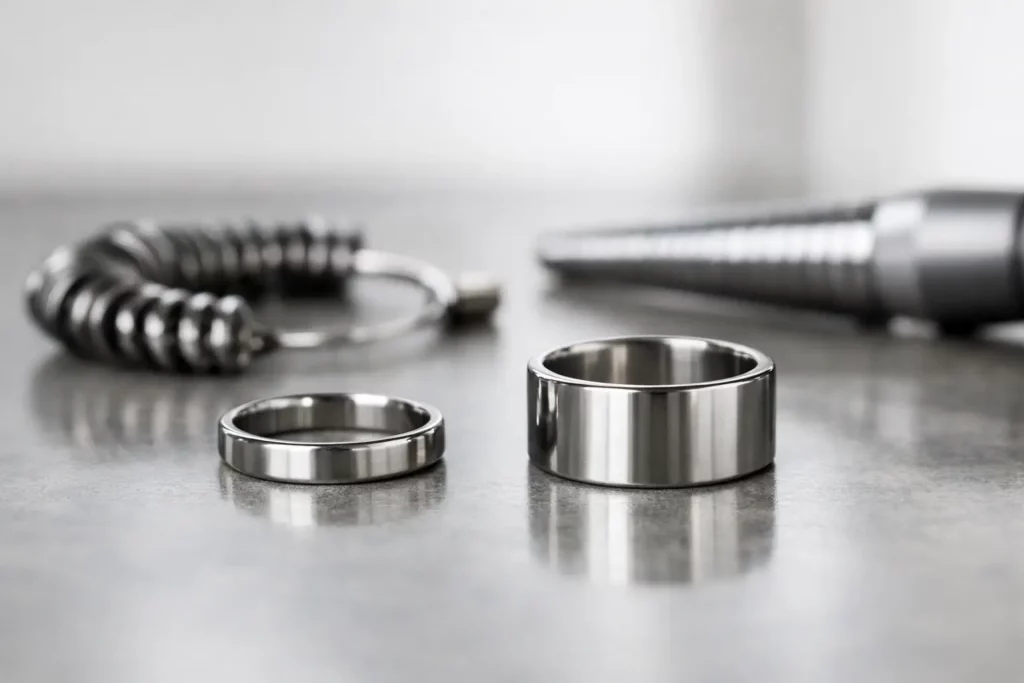
Do wider rings fit tighter? Often, yes – even when the measurement inside the ring is exactly the same. A slim wedding band and a broader one can sit very differently on the same finger, which is why choosing a ring size is about more than a letter on a sizing stick. It is about how the ring feels when you make a fist, hold hands, work, sleep and move through ordinary life together.
For a ring you will wear every day, comfort matters just as much as the design. This is especially true when you are choosing a wedding band to sit beside an engagement ring, or commissioning a shaped band that has been made around it. The good news is that width, profile and fit can all be considered before your ring is made, so there is no need to guess.
Do Wider Rings Fit Tighter Than Slim Bands?
A wider ring usually feels tighter because more metal is in contact with your finger. A narrow 2mm band only covers a small area of skin. A 5mm, 6mm or 8mm ring spreads across more of the finger, so you notice its presence more when your hand bends and when the ring passes over the knuckle.
That does not mean wider rings are uncomfortable, nor does it mean everyone needs to size up. Some people like the secure, substantial feel of a broad band, while others prefer a little more ease. Finger shape, knuckle size, temperature, daily activity and the ring’s internal profile all make a difference.
The key point is simple: do not assume the size that feels perfect in a delicate sample will feel identical in a wider design. Trying on a band close to your intended width is one of the most useful parts of the sizing process.
Why Band Width Changes the Way a Ring Feels
More contact creates more pressure
Your finger is not perfectly cylindrical. It changes slightly in width from the base to the knuckle, and the skin compresses as a ring moves over it. With a wider band, there is more contact over this changing surface. The result can be a snugger sensation, particularly if you have a pronounced knuckle or your fingers tend to swell during the day.
A wider ring may also feel more noticeable when you close your hand. This is not necessarily a sign that it is too small. A well-fitted broad band should feel present but not restrictive. You should be able to remove it with a gentle twist, without pain, and it should not spin constantly or slide off too easily.
The profile matters as much as the width
Two rings of the same width can feel completely different. A traditional court profile is rounded on the outside and inside, creating a softly curved feel. A flat band has straighter edges and a more contemporary look, but it can feel firmer against the finger. A flat court combines a flatter exterior with a rounded interior, offering a clean silhouette with a little extra comfort.
Comfort-fit rings have a more noticeably rounded inside edge. This reduces the amount of metal pressing into the finger and can make a broader ring easier to wear. It is a particularly worthwhile option for anyone drawn to a wider wedding band but concerned that it may feel tight.
Your engagement ring changes the experience too
If your wedding ring will sit next to an engagement ring, the two should be assessed together. A straight band may be perfect on its own but leave an awkward gap beside a low-set centre stone. Equally, a shaped-to-fit band may feel different once it follows the contours of your engagement ring.
The combined width of the set matters. Two slim rings can feel delicate individually yet take up a substantial amount of space when worn together. A broader wedding band paired with an engagement ring may need careful planning to ensure the rings sit comfortably, look balanced and do not rub in a way that becomes irritating over time.
Should You Go Up a Ring Size for a Wider Band?
Sometimes, but not automatically. It is common for people to need a slightly larger size in a wider ring, yet there is no universal adjustment that works for every hand. A person who wears one size in a 2mm ring might prefer a little more room in a 6mm band, while another may find the original size ideal because of their finger shape or preferred fit.
Rather than choosing a size increase based on a rule of thumb, assess the finished design. Consider its width, internal profile, metal thickness and whether it will be worn alone or stacked. A jeweller should also look at how the ring gets over your knuckle and how it settles at the base of your finger.
This is one reason bespoke rings are so reassuring. The sizing conversation can happen alongside the design conversation, rather than being treated as an afterthought. If you are adapting an heirloom, adding a personal engraving or creating a band around an existing engagement ring, these details deserve the same attention as the metal and finish.
How to Tell Whether a Wider Ring Fits Properly
The right fit should feel secure without leaving you desperate to take the ring off at the end of the day. It should move over the knuckle with light resistance, then rest comfortably without deep marks, tingling or pressure. A small indentation after wearing any ring is normal, especially in warmer weather, but persistent discomfort is not.
Try rings at a time when your hands feel typical. Fingers can be smaller first thing in the morning and larger after exercise, a hot shower, salty food, alcohol or a long journey. If possible, wear a sample for a little while rather than judging the fit in a few seconds at a counter. Make a fist, hold a bag, type on your mobile phone and notice the edges against neighbouring fingers.
It is also wise to tell your jeweller if your fingers change size noticeably through the seasons, if you have arthritis, or if you work with your hands. There may be a design choice that improves everyday comfort, such as a softer profile, a slightly different width or an internal shape tailored to you.
Choosing Width Without Compromising Your Style
A wider band can be striking, timeless and beautifully personal. It offers more space for a meaningful engraving, a brushed finish, a subtle pattern or a design that echoes the details of an engagement ring. It can also feel reassuringly solid, particularly for those who prefer jewellery with presence.
Slim bands have their own appeal. They can look refined beside a detailed engagement ring, create a lighter feel on shorter fingers and work well for delicate stacking. Neither option is better – the most successful choice is the one that suits your hand, your lifestyle and the way you want your wedding ring to feel.
For couples designing matching bands, remember that matching does not have to mean identical. You might share the same metal, engraving or finish while choosing widths and profiles that feel right for each person. That personal consideration is often what makes a pair of rings feel more meaningful.
A More Confident Way to Size a Bespoke Wedding Ring
Bring your engagement ring to your consultation if you have one, or share clear photographs and measurements if you cannot bring it in. This helps establish whether a straight, curved, notched or fully shaped band will give you the closest fit. It also gives you the chance to see how the overall set will sit on the hand, not just how one ring looks in isolation.
At BWR London, the aim is to make those decisions feel calm and considered. You can talk through the width you love, the comfort you need and the sentimental details you want to include, then create a ring that is made for your hand and your story rather than chosen from a standard tray.
A wider ring should never be dismissed because it feels different in the first try-on. With thoughtful sizing and the right profile, it can become the kind of ring you barely notice wearing – until you look down and remember exactly why it is there.