

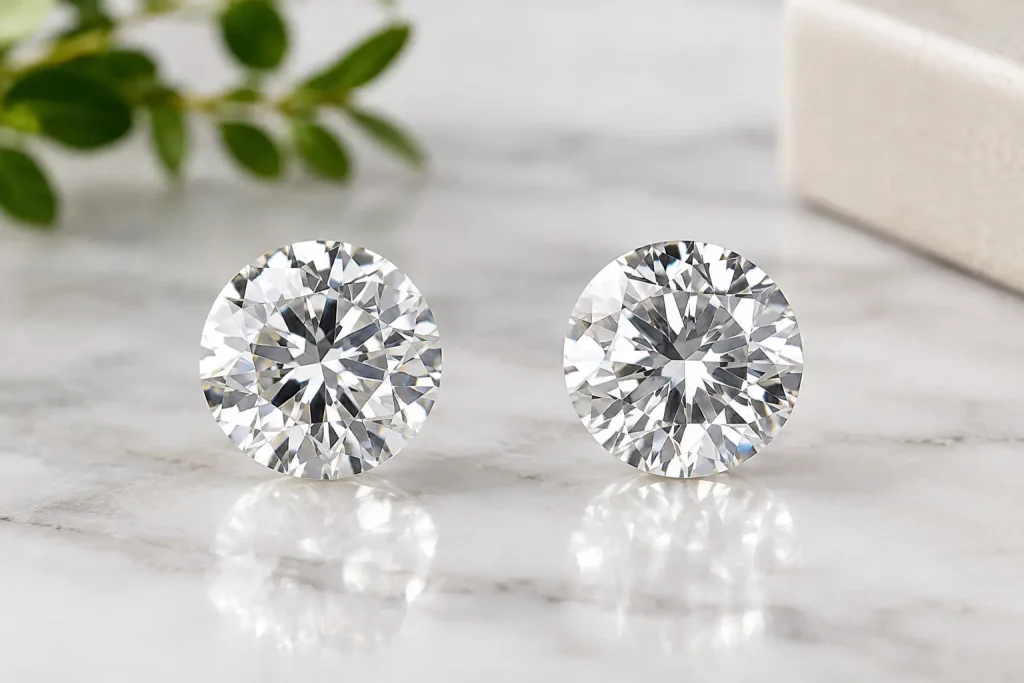
The diamond you choose can shape far more than the look of an engagement ring. It may affect your budget, the size and setting you can consider, and the story you attach to a piece you will wear every day. When comparing lab grown versus natural diamonds, there is no single “right” answer. There is simply the stone that suits your priorities, your design and your life together.
For couples planning a bespoke ring set, the question becomes even more personal. You may be picturing a substantial centre stone with a delicately shaped wedding band, choosing a smaller natural diamond with a family connection, or balancing both rings within one considered budget. Understanding the differences makes that decision feel much less daunting.
Lab grown versus natural diamonds: the essential difference
Both lab grown and natural diamonds are real diamonds. They have the same chemical composition – carbon arranged in a crystal structure – and share the brilliance, hardness and durability associated with diamond. A trained jeweller may use specialist equipment to identify their origin, but to the eye, a high-quality lab grown diamond can look identical to a natural diamond of the same cut, colour and clarity.
The difference is how and when they formed. Natural diamonds developed deep within the earth over billions of years before being mined. Lab grown diamonds are created in controlled conditions using technology that recreates the pressure and heat needed for diamond growth. The two principal methods are High Pressure High Temperature, known as HPHT, and Chemical Vapour Deposition, or CVD.
Neither origin makes a diamond inherently more beautiful. Beauty comes chiefly from cut: how well the stone handles light, its proportions, symmetry and polish. This is why comparing certificates and seeing diamonds properly, rather than choosing only by carat weight, matters so much.
What changes when you wear the ring?
In practical terms, very little. Diamond is the hardest natural material used in jewellery, rating 10 on the Mohs scale, whether it is grown in a laboratory or formed beneath the earth. Both are suitable for an engagement ring designed to be worn daily, provided the setting is thoughtfully made and checked from time to time.
Both types can also be cut into the shapes couples love: round, oval, pear, emerald, radiant, marquise and more unusual bespoke cuts. They can sit in platinum, yellow gold, white gold or rose gold, and can be paired with a shaped wedding band made to follow the exact outline of the engagement ring.
A diamond still deserves sensible care. Take rings off for heavy lifting, gardening, gym sessions and harsh cleaning products. Store them separately where possible, as diamonds can scratch other jewellery. These habits protect the setting and metal as much as the stone itself.
The four Cs still apply
Cut, colour, clarity and carat weight are useful benchmarks for either origin. They help you understand why two diamonds of similar size may be priced differently. Yet they are not a substitute for personal judgement.
A perfectly colourless, high-clarity stone may not be the best use of your budget if a slightly warmer diamond looks beautiful in yellow gold and allows room for a more intricate setting or a wedding band you truly love. Equally, a sharply cut diamond with excellent light return can often appear more lively than a larger stone chosen only for its carat figure.
Ask to see the grading report for the individual diamond. Reputable reports identify whether a diamond is natural or laboratory grown. That transparency is essential, especially for a purchase with lasting emotional and financial significance.
Price: where the choice can open possibilities
The most noticeable difference for many couples is price. Lab grown diamonds generally cost less than natural diamonds with comparable grades. That can make a larger carat weight, a higher clarity grade or a more elaborate bespoke design possible within the same overall budget.
This does not mean lab grown diamonds are the “budget” choice in any dismissive sense. Many couples choose them deliberately because they prefer putting more of their budget towards design, craftsmanship, a shaped-to-fit wedding band, an engraving, or simply other plans for their future. A lab grown diamond can be a beautiful centrepiece in a carefully made ring.
Natural diamonds tend to carry a higher price because of their geological rarity, established supply chain and enduring place in jewellery history. For some people, the age and natural origin of the stone are central to its appeal. A natural diamond can also feel particularly meaningful when it is part of a family piece or chosen to continue a tradition.
It is wise, however, not to treat either type as a guaranteed investment. Jewellery is first and foremost something to wear, treasure and pass along if you wish. Resale values vary widely according to market demand, provenance, condition, brand and the individual stone. Buy the diamond you genuinely want to live with, rather than one based on promises about future returns.
Ethics and traceability deserve a closer look
Ethical considerations are often a major part of the decision, but the picture is more nuanced than “lab grown is ethical and natural is not”. A lab grown diamond avoids mining, but its environmental footprint depends on the energy used in its production, along with the processes involved in cutting and transport. Where possible, ask about the diamond’s growth method and the supplier’s approach to energy and traceability.
Natural diamonds can come from suppliers with established traceability standards and responsible sourcing practices. Their impact varies by mine, region and supply chain, so it is reasonable to ask direct questions about origin and sourcing rather than relying on broad labels alone.
The same care should extend to the metal in your ring. Recycled precious metals, responsibly sourced materials and transparent manufacturing can all be meaningful considerations. The best choice is an informed one, made with clear information and no pressure.
How to choose the diamond that feels like yours
Begin with the story you want your ring to tell. If you love the thought of a stone formed by the earth over immense time, and that origin matters deeply to you, a natural diamond may be the right fit. If you value the opportunity to select a larger or higher-grade diamond within your budget, and are comfortable with a modern origin, lab grown may feel exactly right.
Then consider the whole ring, rather than viewing the centre stone in isolation. A low-set oval with a hidden halo may need a custom curved wedding band. A prominent solitaire can allow a straighter band to sit neatly beside it. A three-stone ring may call for a band shaped around the setting so both rings feel intentional, comfortable and balanced on the hand.
Bringing reference images, an heirloom ring or a clear sense of your daily routine to a consultation can be incredibly helpful. If you work with your hands, prefer a low-profile setting or dislike the feeling of rings catching on knitwear, those details should guide the design as much as diamond specifications do.
Questions worth asking before you decide
You do not need to become a diamond expert overnight. A good jeweller should explain the options in plain language and give you room to think. Ask whether the diamond has an independent grading report, how its cut and proportions affect its appearance, and what options work best for your chosen setting.
You can also ask to compare lab grown and natural diamonds with similar specifications. Seeing them side by side is often reassuring, particularly if you have concerns about sparkle or appearance. Discuss the total budget for both engagement and wedding rings too. Planning them together can prevent a beautiful engagement ring from becoming difficult to pair later.
At BWR London, the focus is on making that process personal: listening to what matters to you, designing around the engagement ring you have or love, and creating a wedding band that feels made for it because it is.
A choice with room for sentiment
A natural diamond may carry the romance of deep time. A lab grown diamond may represent a thoughtful, contemporary decision that lets you make more space for the design details that matter to you. Both can mark a commitment with beauty, permanence and care.
Choose the stone that makes you feel excited when you look down at your hand, then give it a setting and a wedding band that honour that feeling every day.