

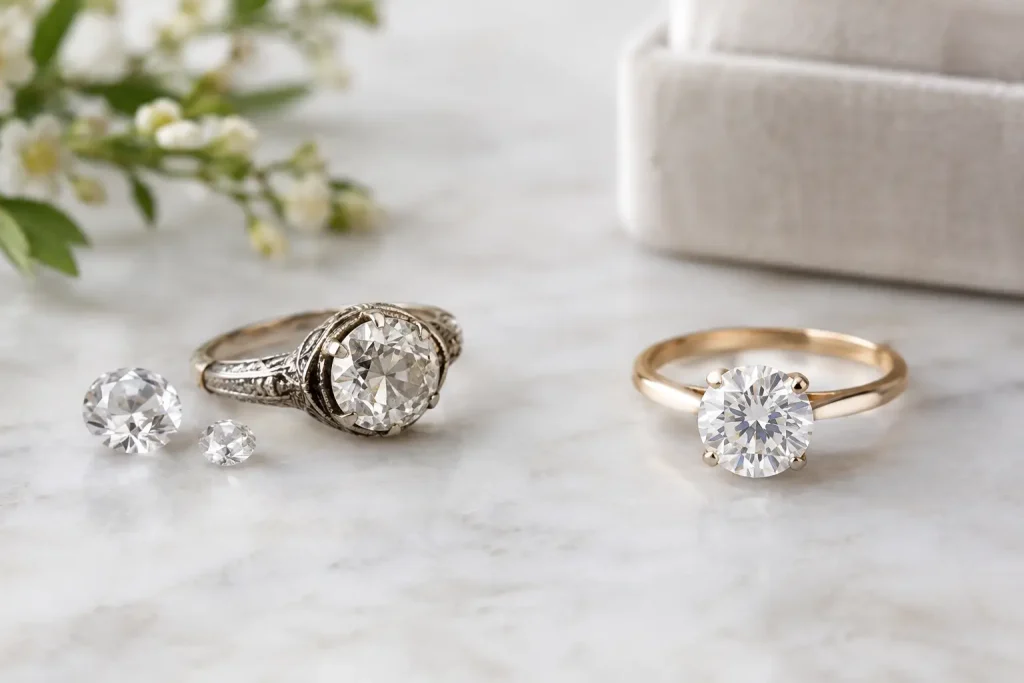
A diamond passed down through a family can hold far more than financial value. It may be the stone your grandmother wore every day, a gift from a parent, or a ring that no longer suits its owner but still deserves to be part of your story. So, can heirloom diamonds be reused? In many cases, absolutely – and a thoughtful redesign can make a treasured stone wearable for the next chapter of its life.
The key is not simply taking an old diamond out of one ring and putting it into another. A successful heirloom redesign balances sentiment, security, personal style and the practical condition of the stone. With the right advice, an older diamond can become the heart of a bespoke engagement ring, a shaped wedding band, or a new piece designed for everyday wear.
Can heirloom diamonds be reused safely?
Most diamonds can be reused, because diamond is exceptionally durable. It ranks highly for scratch resistance, which is one reason it has remained a favourite for jewellery passed between generations. However, durable does not mean indestructible. Before any design decisions are made, the diamond should be carefully assessed by an experienced jeweller.
A professional will look for chips, abrasions, existing fractures and areas around the girdle – the outer edge of the diamond – that may need extra protection. They will also check whether the stone has been treated, whether it is secure in its current setting and whether it can safely be removed. Older settings can become worn over decades, so a diamond that appears fine at first glance may need particularly gentle handling.
This assessment is reassuring rather than discouraging. It helps determine the best setting for the stone and avoids forcing it into a design that is not right for it. A diamond with a slightly delicate edge, for example, might be better protected by a bezel, halo or carefully designed claw setting than by a more exposed style.
Why redesign a family diamond?
There is something deeply personal about wearing a family stone in a ring that feels unmistakably yours. Redesigning does not have to mean erasing the past. It can be a way of carrying it forward, whether you retain a recognisable detail from the original ring or create a completely fresh design around the diamond.
For couples planning a wedding, heirloom diamonds are especially meaningful in an engagement ring or a wedding ring that sits alongside one. You may have inherited a solitaire with a yellow-gold setting but dream of a platinum engagement ring. Or perhaps an existing engagement ring needs a wedding band that follows its unusual shape, incorporates a small family diamond, and feels like it was always meant to sit beside it.
Reusing the stone can also make a bespoke ring more achievable financially. You are supplying the central diamond, so your budget can be directed towards the craftsmanship, metal, setting and any additional stones needed to create the finished piece. The exact saving depends on the diamond’s size, quality and the complexity of the design, but it is worth discussing early in the process.
Start with the diamond, not the old ring
It is easy to feel that you must preserve every part of an inherited ring. Sometimes that is exactly right. In other cases, the diamond is the element with the strongest emotional connection, while the old setting does not match your taste, lifestyle or plans for the ring.
Begin by deciding what you would like to keep. That might be the centre stone alone, the engraving inside the band, a small accent diamond, or simply the memory attached to it. Sharing reference images, photographs of the original piece and a clear sense of how you want to wear the new ring gives your designer a meaningful starting point.
The shape and proportions of the diamond will guide the design. An old-cut diamond may have a softer, more romantic character than a modern brilliant cut. A marquise, pear or oval stone may need a setting that protects its pointed ends. A modestly sized diamond can look beautifully intentional in a fine, elegant design, while several inherited stones can be arranged into a cluster or a contoured wedding band.
There is no requirement for the redesign to look vintage just because the diamond is old. Equally, you do not need to turn it into something ultra-modern. The best result is a ring that feels right for the person who will wear it, while respecting what makes the stone special.
Choosing the right setting for everyday life
A beautiful ring should also work with your real life. Consider your work, hobbies, handwashing routine and how often you plan to wear the piece. High settings can show a diamond to its full advantage, but they may catch more easily on clothing. Lower-profile designs can feel practical and comfortable, particularly for someone who uses their hands often.
The choice of metal matters too. Yellow gold can echo the warmth of a traditional family ring, while platinum offers a naturally white tone and excellent durability for claws. White gold, rose gold and mixed-metal designs each create a different feel. Your jeweller can explain which options suit your diamond, the intended setting and your budget.
If the heirloom diamond is going into an engagement ring, it is sensible to think about the wedding band from the outset. A prominent setting, unusual shape or low basket can affect how closely a straight band will sit. Planning both rings together allows for a shaped-to-fit wedding band that follows the engagement ring neatly, avoids an awkward gap and feels comfortable on the hand.
What happens to the original setting?
The original setting may have a future of its own. If it is in good condition and carries family significance, it can be kept intact as a treasured piece. It may also be possible to reuse some of its diamonds in a new design, depending on their condition and size.
When old metal is involved, expectations need to be realistic. Jewellery metal may contain solder, wear or alloys that make it unsuitable to melt and remake directly. In many cases, it is safer to create a new ring in fresh metal and preserve the original separately. Some clients choose to sell or part-exchange unwanted metal where appropriate, while others keep it in the family as a memento.
A careful jeweller will explain these options honestly before work begins. The aim is never to make a sentimental decision on your behalf, but to ensure you understand what can safely be reused and what is best retained as it is.
Questions to ask before an heirloom redesign
Before committing to a design, ask how the diamond will be inspected, removed and protected during the process. You should also understand whether the stone will be insured while it is with the jeweller, how the new setting will protect any vulnerable points, and whether the finished ring can be resized in future.
It is also helpful to discuss certification. Some inherited diamonds have paperwork, while others do not. Depending on the stone and your plans, an updated assessment or grading report may be useful for insurance and peace of mind. A valuation is separate from a grading report, so ask which is appropriate for your circumstances.
Finally, allow yourself time. A family diamond can bring up strong feelings, especially when several relatives are involved. You do not need to decide immediately whether the old ring should be dismantled. A consultation can explore different sketches, metals and settings without rushing the sentimental part of the decision.
A ring with history and a future
At BWR London, bespoke design begins with listening. Whether you have one inherited diamond, a collection of small stones, or an engagement ring that needs a perfectly fitted wedding band, the conversation starts with your story and how you want the finished ring to feel.
Bring photographs, share your ideas and be honest about what you love and what you would change. The most meaningful heirloom redesigns are not copies of the past. They are carefully made for the life ahead – a familiar sparkle, newly worn, with another generation of memories still to come.