

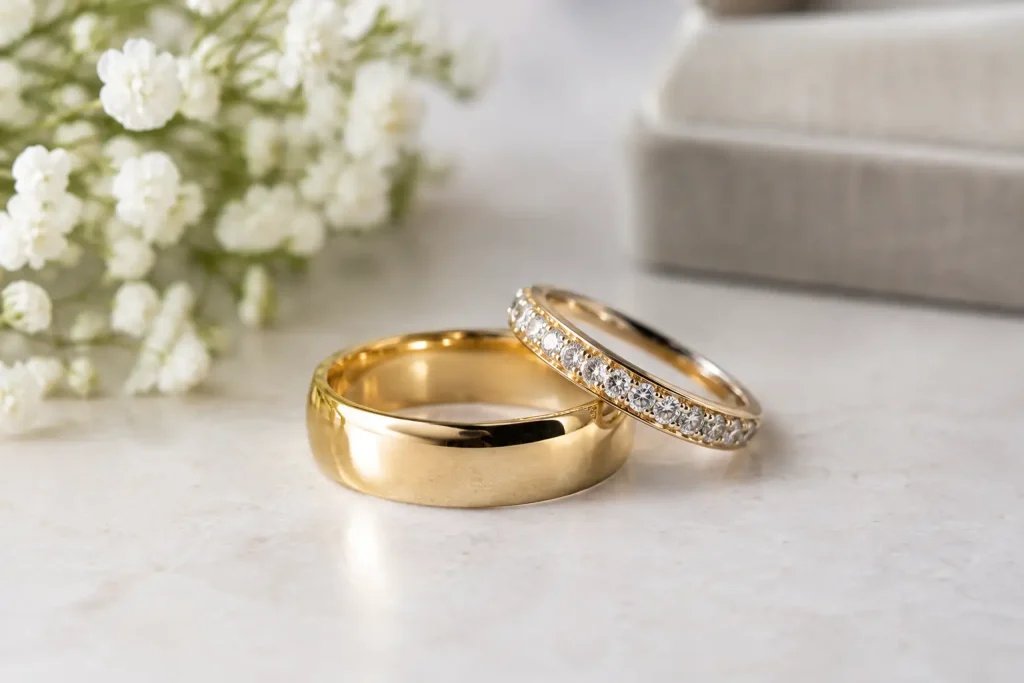
A wedding ring is one of the few things you will wear every day for decades. That is why wedding ring craftsmanship should be felt as much as seen: in the comfort of the fit, the way a shaped band sits beside your engagement ring, and the confidence that it can share real life with you.
A beautiful finish matters, of course. But true quality is not simply a high shine in a showroom. It is the thoughtful work behind the ring – the questions asked before it is made, the care taken over proportions, and the skill used to turn a personal idea into something strong, comfortable and unmistakably yours.
What wedding ring craftsmanship really means
Craftsmanship starts long before the metal reaches the bench. For a bespoke wedding ring, the first stage is listening. Your jeweller needs to understand how you wear your engagement ring, whether you prefer a fine and delicate look or a more substantial band, what you do with your hands each day, and which details carry meaning for you both.
A ring can look perfect in a photograph yet feel wrong on the hand. Perhaps it turns too easily, catches on clothing, leaves a visible gap beside a low-set engagement ring, or feels too light for everyday wear. These are not small details. They are the difference between a ring you admire occasionally and one you genuinely enjoy wearing.
Good making brings design, durability and comfort together. The best choice is rarely about following one rule. A very slim band may suit someone who wants a subtle stack, while another person may need a wider, more solid profile for balance or longevity. The right design depends on your engagement ring, your lifestyle and your personal taste.
The details that make a bespoke band feel different
When a wedding band is made specifically for you, each element can be considered in relation to the whole ring rather than chosen from a standard tray. This is especially valuable when matching an engagement ring with an unusual setting, a prominent centre stone or a distinctive silhouette.
A shape made to sit beautifully
A shaped-to-fit wedding band follows the contours of an engagement ring so the two can sit together neatly. It may curve around a stone, dip beneath a setting or trace the outline of an existing design. Done well, it should look intentional from every angle, not like a compromise made to fill an awkward space.
Creating this shape calls for precision. The curve must provide enough clearance for the engagement ring while maintaining an even, comfortable band. A curve that is too deep can make the wedding ring feel delicate in the wrong places. One that is too shallow may leave the gap you hoped to avoid. Looking closely at the engagement ring, rather than relying on a general measurement, is essential.
Proportions that feel right on the hand
Width, depth and profile deserve more attention than they usually receive. A narrow band can be elegant, but it needs enough depth to retain its shape over years of wear. A wider ring can make a strong statement, although its inside profile should be carefully softened so it remains comfortable.
Many couples are surprised by how different two rings of the same width can feel. A court profile is rounded for a traditional, comforting feel. A flat or bevelled profile has a cleaner, more contemporary character. There is no universally better option. Trying on styles and discussing your usual jewellery can make the decision far easier.
Settings and stones that suit daily wear
Diamonds or coloured stones can add a personal touch to a wedding band, whether you prefer a full eternity look, a subtle scattering or a few meaningful stones. Yet stone setting is where appearance and practicality must meet.
A full eternity ring offers sparkle all the way around, but it cannot usually be resized as easily as a plain band. A half eternity style leaves room for future adjustments and places the stones where they are most often seen. The choice may come down to finger size changes, budget, desired sparkle and how much flexibility matters to you later on.
Secure setting work is just as important as stone choice. Each stone should sit evenly, with smooth claws or bead settings that do not snag. The metal around it needs to be substantial enough to protect it through ordinary wear, not merely look good when new.
Materials are part of the craft, not an afterthought
The metal you choose affects colour, weight, maintenance and the way the ring wears over time. Yellow gold brings warmth and a classic character. White gold offers a bright, crisp look, though it may need replating occasionally to maintain its finish. Platinum is naturally white, dense and durable, developing a soft patina rather than losing its colour.
There is also no need to match metals by default. A yellow gold wedding band beside a white gold or platinum engagement ring can look beautifully intentional, particularly if the engagement ring includes warm-toned details. Equally, a perfect colour match may be the priority for a more seamless set. Seeing samples against your own ring is often more helpful than deciding from photographs alone.
For many couples, responsible sourcing is also inseparable from quality. Knowing where materials come from and choosing a jeweller who treats those decisions with care adds another layer of reassurance to a ring designed to mark a lifelong commitment.
Why the finishing stage matters so much
Finishing is where the workmanship becomes immediately visible. It includes refining the shape, smoothing the edges, setting stones, polishing the surface and checking that the inside of the band feels as good as the outside looks.
A highly polished finish has a bright, reflective appearance, while a satin or brushed finish is softer and can disguise fine surface marks more easily. Neither is more luxurious than the other. The best finish is the one that suits your style and expectations of wear.
The inner edge deserves particular care. Comfort-fit bands are gently rounded on the inside, which can make a noticeable difference if you are not used to wearing rings or prefer a wider design. A well-finished ring should slide on without sharpness or resistance and should not feel as though it is constantly asking for your attention.
Personal details worth making time for
Bespoke work creates space for details that would be difficult to find in an off-the-shelf ring. An engraving can hold a date, a private phrase, initials or even handwriting. A tiny hidden stone can represent a child, a place or a shared memory. Heirloom gold or stones may be incorporated into a new piece, allowing family history to become part of a design that suits your life now.
These choices do not need to be extravagant to be meaningful. Often, the most treasured detail is one only the wearer knows is there. The important thing is that it is considered early, particularly where engraving placement or inherited materials might affect the design process.
A calmer way to commission your rings
A bespoke ring should not feel intimidating. You do not need to arrive with a technical drawing or know the name of every profile. A clear photograph of your engagement ring, a few reference images, and an honest conversation about what you like and what you want to spend are a very good starting point.
At BWR London, the process is built around that conversation. Whether you are trying to solve the challenge of a shaped band, rework a family piece or create something entirely new, expert guidance gives you room to make decisions at your own pace.
The most enduring wedding rings are not necessarily the loudest or the most elaborate. They are the ones made with enough care to become part of your everyday life – comfortable in the quiet moments, beautiful in the memorable ones, and personal every time you look down at your hand.