

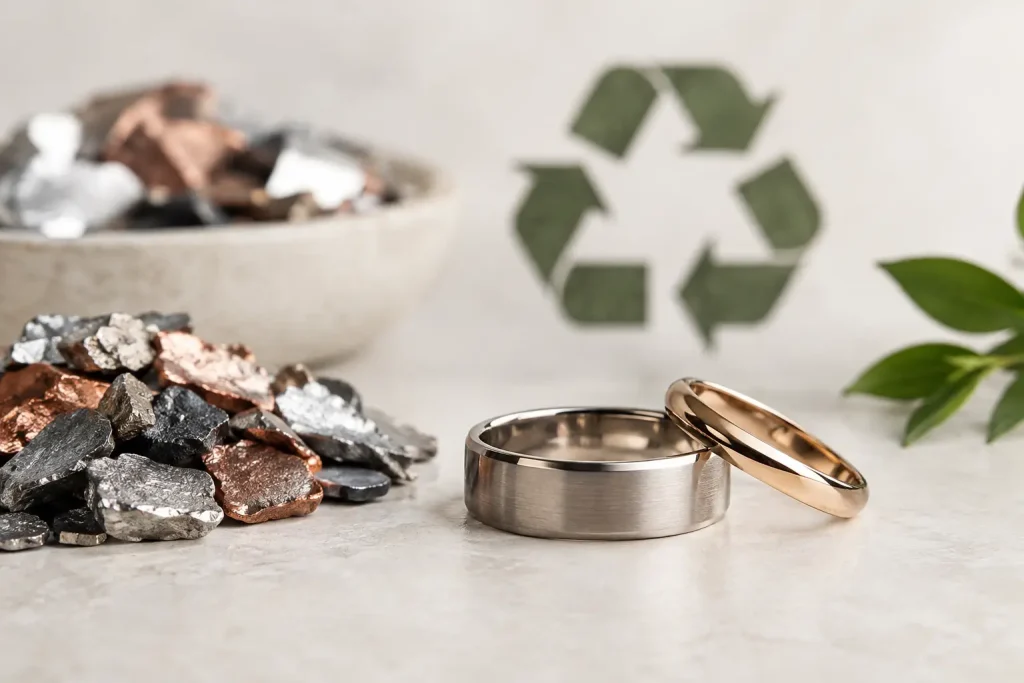
A wedding ring has to cope with far more than a beautiful photograph. It will meet hand sanitiser, gardening gloves, gym sessions, cooking, holidays and all the small routines that make up a life together. So, are recycled metals durable enough for a ring you plan to wear every day? When they are properly refined and expertly alloyed, the answer is yes.
The key point is that recycled precious metal is not simply old jewellery melted down and reused as it is. It is refined back to a pure state, tested and blended into a new alloy with the same care as newly mined metal. The finished gold or platinum can offer the same strength, quality and longevity as its newly sourced equivalent.
For many couples, that means choosing recycled metal is not a compromise. It is a thoughtful way to create something personal while considering where the material has come from.
Are recycled metals durable in a wedding ring?
Recycled gold, platinum and silver can all be durable, but durability depends on the metal, its purity, the alloy recipe and the design of the ring. A delicate band with a very fine setting will naturally need more care than a wider, solid band, whatever the origin of the metal.
Precious metals are valued because they can be worked, repaired and worn for generations. A recycled gold wedding ring does not carry a hidden weakness because the gold was previously used in another piece of jewellery. During refining, the metal is purified to remove unwanted elements. It can then be alloyed again to the required standard, such as 9ct, 14ct or 18ct gold.
In practical terms, a well-made recycled 18ct yellow gold band should wear in the same way as a well-made 18ct yellow gold band made from newly mined gold. The same principle applies to platinum. What matters is the finished material and the craftsmanship behind it, rather than whether the original metal began life in a mine, an unworn chain or a family heirloom.
Why the refining process matters
Jewellery metals are rarely used in their purest form. Pure gold is wonderfully rich in colour, but it is also soft. To make it suitable for everyday jewellery, it is mixed with other metals to create an alloy. These additions influence hardness, colour and the way the metal behaves over time.
This is why a reputable jeweller should be able to talk clearly about the metal being used, not just label it as recycled. Responsible sourcing is meaningful, but so is the quality control that follows. Proper refining and alloying create a consistent metal that can be shaped, polished, engraved and, if needed in years to come, resized or restored.
Platinum is often chosen by couples looking for a naturally white metal with reassuring weight. It is dense and highly durable, although it develops a soft patina rather than staying mirror-bright forever. That change is not damage – it is part of platinum’s character, and it can be polished if you prefer a brighter finish.
Gold behaves differently. Yellow gold is a classic choice for a warm, timeless wedding band, while rose gold gets its blush tone from copper in the alloy. White gold is usually strengthened with other pale metals and may have a rhodium finish for a crisp white appearance. Over time, that plating can wear away and need renewing. This is normal maintenance, not a failure of either recycled or newly sourced metal.
The metal you choose affects everyday wear
There is no single best metal for every couple. The right choice depends on your lifestyle, the look of your engagement ring and what you want your wedding band to feel like on your hand.
A recycled platinum band is an excellent option for someone who wants a substantial ring and likes the idea of a metal that displaces rather than loses material when it is scratched. Fine scratches can still appear, particularly on a polished finish, but platinum retains its volume well over time.
Recycled 18ct gold offers a beautiful balance of precious-metal content and everyday practicality. It is softer than lower-carat gold, which can make it more prone to surface marking, but it is a longstanding favourite for wedding jewellery and can be cared for, polished and repaired beautifully. A slightly wider band can also feel more substantial if you lead a hands-on life.
Recycled 9ct gold is harder wearing in some respects because it contains a lower percentage of pure gold and more alloy metals. It can be a sensible choice for a budget-conscious design, though its colour is often less rich than 18ct gold. Neither is automatically better – it is about what matters most to you: colour, weight, price or resistance to everyday marks.
Silver is a lovely choice for certain pieces, but it is generally softer and more likely to tarnish than gold or platinum. For a wedding ring intended for constant wear, gold or platinum is usually the more practical long-term choice.
Design has as much influence as the metal
A ring’s strength is shaped by its design. This matters especially when you are creating a shaped-to-fit wedding band around an engagement ring. A contour or wishbone can be made to sit beautifully beside a setting, but it needs enough depth and thickness in the right places to remain comfortable and secure.
Very fine points, extremely thin curves and delicate pavé edges may look beautiful, yet they require a little more consideration. An experienced jeweller will look at where the ring will take pressure, how it meets your engagement ring and whether stones or detailed settings need additional protection.
This is where bespoke design is particularly valuable. Rather than choosing a standard shape and hoping it works, you can create a band around the proportions of your existing ring. The aim is not only a perfect visual match. It is a ring that sits comfortably, wears well and feels like it was always meant to be there.
A plain recycled-metal band is often the most resilient style, but durability does not mean you have to give up personality. Engraving, a brushed finish, a subtle twist, milgrain detailing or a meaningful hidden detail can all be incorporated with thoughtful planning. The important thing is that the design reflects real life as well as your personal style.
What recycled metal cannot change
Choosing recycled metal does not make a ring indestructible. No precious-metal wedding ring is completely immune to scratches, knocks or gradual wear. Even platinum can be marked, and even a strong gold alloy can become misshapen if it catches heavily on something.
It also cannot fix an unsuitable design. A band that is too thin for its width, a setting with insufficient support, or a shape that constantly rubs against an engagement ring may wear faster regardless of how responsibly the metal was sourced.
The reassuring part is that precious jewellery is made to be cared for. Most rings benefit from occasional professional checks, particularly if they contain diamonds or other stones. Prongs can be tightened, finishes refreshed and small issues addressed before they become bigger repairs.
At home, a gentle clean with warm water, mild washing-up liquid and a soft brush is often enough for gold and platinum. Take rings off for tasks involving harsh chemicals, heavy lifting or messy manual work, and store them separately when not being worn. These small habits protect any wedding ring, recycled or otherwise.
A meaningful material for a ring made to last
For some couples, recycled metal is simply a practical ethical preference. For others, it becomes part of the story behind the ring: a material with a past, transformed into a symbol of a future together. If you are remodelling inherited jewellery, there can be even more emotional significance in carrying a connection to family into a new design.
That said, heirloom remodelling needs an individual assessment. Older pieces may contain mixed alloys, worn settings or stones that need careful handling. Sometimes the best route is to refine the original metal before making something new; in other cases, preserving part of the original piece alongside newly refined recycled metal may make more sense. Honest advice matters here, because the right decision should protect both the sentiment and the finished ring.
At BWR London, every bespoke ring begins with listening – to the shape of your engagement ring, the details you love and the life your jewellery will share with you. Recycled gold or platinum can be a beautiful, lasting choice when the material and design are selected with care.
Your wedding band does not need to be flawless forever to be treasured forever. It needs to be thoughtfully made, comfortable to wear and ready to gather the small marks of a life well lived.