

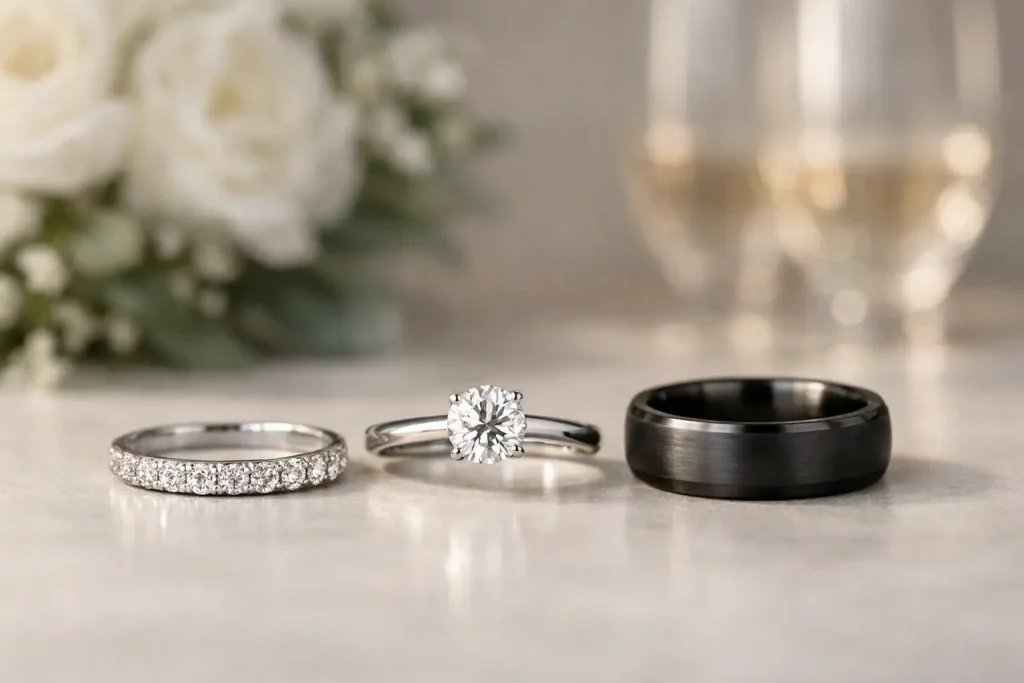
A wedding ring can be exquisitely made, perfectly matched to your engagement ring and full of meaning, yet still feel wrong if it catches, pinches or makes you want to take it off by lunchtime. The best wedding rings for comfort are not defined by one look. They are the rings designed around the shape of your hand, the way you live and the details you genuinely want to wear every day.
Comfort is particularly worth considering if you have never worn a ring before, work with your hands, exercise regularly, or need a wedding band to sit neatly beside an engagement ring. A little expert guidance before a ring is made can make a lasting difference.
What makes a wedding ring comfortable?
Comfort comes from proportion as much as profile. A ring should feel secure without pressing into the skin, move naturally with your finger and avoid sharp edges that you notice every time you grip a steering wheel, type or carry shopping bags.
Your fingers also change slightly throughout the day. Warm weather, exercise, travel and even a salty meal can cause temporary swelling. The right fit accounts for this normal movement, rather than feeling very tight when measured in ideal conditions.
The inside of the band matters most. Traditional flat bands can have crisp internal edges, while comfort-fit rings are gently rounded on the inside. This creates a smoother contact point and often makes the ring easier to slide over the knuckle. It is a subtle feature, but one many people appreciate from the first wear.
Best wedding rings for comfort by profile
Comfort-fit bands
For many couples, a comfort-fit profile is the easiest starting point. The inner surface is softly curved rather than flat, reducing the feeling of the metal digging into the finger. It is a particularly lovely choice for wider rings, because a wider band naturally touches more skin.
A comfort fit does not dictate the exterior style. Your ring can still look classic, gently rounded, flat, bevelled or softly domed from the outside. It simply changes how the ring feels against your hand.
There is one practical trade-off: comfort-fit bands can feel slightly roomier than a flat-profile ring in the same measured size. This is why trying sample profiles or discussing sizing with a specialist is more helpful than relying on a previous ring size alone.
Soft court and D-shaped rings
A traditional court-shaped band is rounded both inside and out, giving it a timeless, smooth appearance. It suits couples who want a classic wedding ring with no harsh lines, and it is often comfortable for everyday wear in a moderate width.
A D-shaped band has a curved outer surface with a flatter inner surface. It has a more recognisable traditional silhouette and can be a good option if you prefer the feeling of a ring sitting firmly in place. For someone sensitive to edges, however, a soft court or comfort fit may feel gentler over a long day.
Flat bands with softened edges
Flat wedding rings have a clean, contemporary look and can be extremely comfortable when designed thoughtfully. Ask for softened or bevelled edges, especially if you are choosing a wider band. The difference between a sharp-edged flat band and one that has been carefully eased by hand is substantial.
This style works well for those drawn to a minimal, architectural finish, or for a wedding band intended to echo the straight lines of an engagement ring. A brushed finish can make it feel understated, while a polished edge adds a little contrast without changing the profile.
Shaped-to-fit wedding bands
If your engagement ring has a low setting, a prominent centre stone or an unusual silhouette, forcing a straight wedding band alongside it can create a gap, pressure point or awkward overlap. In these cases, the most comfortable choice may be a shaped-to-fit band made specifically around your engagement ring.
A gentle curve, notch or more intricate contour allows the two rings to sit together naturally. It also prevents the daily rubbing that can happen when rings knock against one another. The shape does not need to be dramatic. Often, the most elegant result is a subtle curve that looks intentional when worn alone and perfectly coordinated when stacked.
Width and thickness matter more than most people expect
It is easy to focus on the design from above, but the dimensions of a ring affect comfort every day. Narrow bands, often around 2mm, can feel light and unobtrusive. They are popular for delicate stacks, though an extremely thin ring may not suit every lifestyle or provide the visual balance you want beside a larger engagement ring.
Medium widths offer a versatile middle ground. They give enough presence for an engraving or textured finish while remaining easy to wear. Wider bands can look striking and feel wonderfully substantial, but they benefit most from a comfort-fit interior and considered thickness.
Thickness should be balanced, too. A very thin band may feel light but be less suited to heavy wear, while an overly thick ring can feel bulky between the fingers. The right choice depends on your hand, your preferred look and whether the band will be worn alone, stacked or paired closely with an engagement ring.
Choose a metal that suits your skin and routine
The best metal for comfort is partly personal. Platinum is naturally white, reassuringly weighty and a strong choice for everyday wear. Its density gives a lovely sense of substance, although some people prefer a lighter-feeling metal.
Yellow gold has a warm, classic character and is available in different carats. Higher-carat gold contains more pure gold and has a richer colour, but it is also softer. For a ring worn through busy everyday life, the balance between colour, durability and budget is worth discussing.
White gold can offer a bright, polished look, but it is commonly rhodium plated and may need occasional replating over time to maintain its finish. If you have known metal sensitivities, mention them early. Nickel sensitivity, in particular, can influence which alloy is most suitable. A bespoke jeweller can help you choose an ethically sourced metal that feels as good as it looks.
Details that can affect daily comfort
Small design decisions deserve more attention than they usually receive. A deep engraving inside the ring can be sentimental and beautiful, but it should be placed and finished with care so it does not feel rough. Likewise, milgrain edges, beading and textured finishes create character, although smoother inner surfaces are generally kinder to the skin.
Stone-set wedding bands require special thought. Channel-set or flush-set diamonds can provide sparkle with a lower profile than raised claw settings, making them practical for many routines. A full eternity ring is beautiful, but it may be harder to resize and can feel less forgiving if your finger size fluctuates. A half-eternity design can offer more flexibility while still giving plenty of light-catching detail across the visible top of the band.
If you work in a hands-on role, play sport, care for young children or simply dislike the feeling of anything catching, a smooth band or low-set stone design is often the more comfortable long-term choice. That is not a compromise in sentiment. It is a decision to make your ring part of your real life.
Getting the fit right before your ring is made
Ring sizing should happen when your hands are at a normal temperature and not immediately after exercise, a hot bath or a long journey. It is sensible to check more than once, particularly if you are between sizes. Your ring should pass over the knuckle with gentle resistance, then sit securely without leaving deep marks.
For a shaped band, sizing and fit should be considered alongside the engagement ring rather than separately. Bring the ring to your consultation if possible, or provide clear photographs from several angles. This helps the maker understand its setting height, stone placement and how much room is needed for a comfortable pairing.
At BWR London, this is where a one-to-one design process is especially valuable. You can talk through reference images, try proportions and create a band around the ring you already love, rather than settling for a design that is only almost right.
A comfortable ring should still feel like yours
The most wearable wedding ring is not always the thinnest, plainest or most conventional one. Some people feel most comfortable in a weighty platinum court band. Others want a fine contoured ring with a hidden engraving, a brushed finish or heirloom gold reworked into something new.
Give yourself permission to prioritise both feeling and meaning. Ask to see profiles, be honest about your daily routine and do not rush a size decision. The ring you choose will become familiar in the best possible way: a personal piece you barely notice on your hand, but never take for granted.