

An engagement ring gap is often the first thing people notice when they place a wedding band beside their ring. Sometimes it is exactly what they want: a little breathing room that lets each ring keep its own character. Other times, it feels like something is not quite sitting as it should. The difference matters, especially when these are rings you will wear together every day.
There is no single “correct” way for an engagement ring and wedding band to meet. A beautifully matched set might sit perfectly flush, follow every curve closely, or leave a deliberate space between the two. What matters is that the pairing feels comfortable, secure and personal to you.
What is an engagement ring gap?
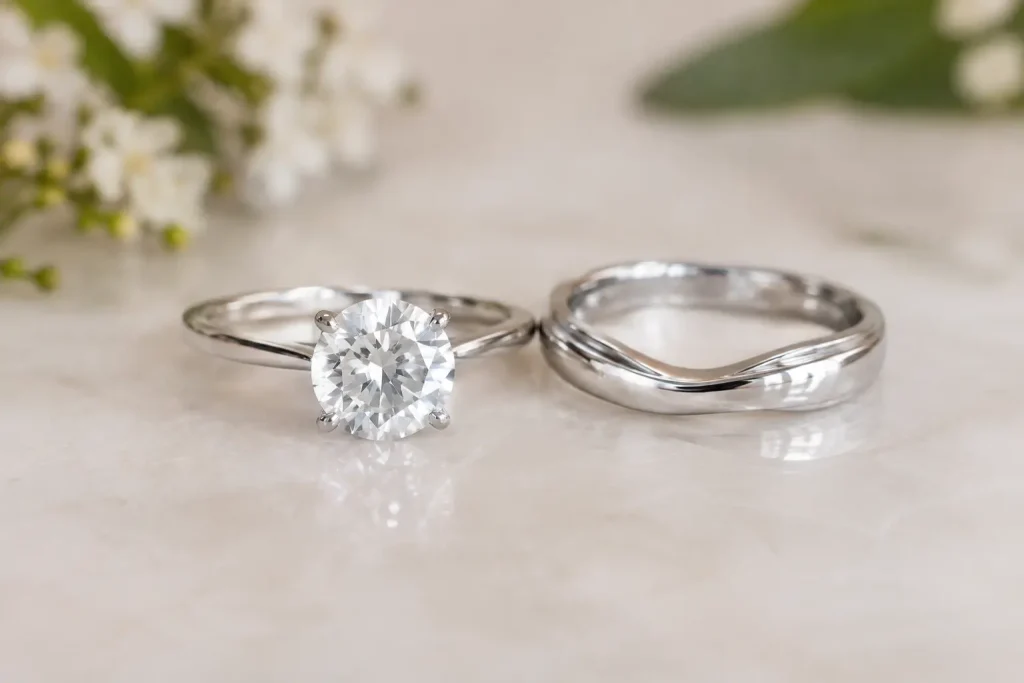
An engagement ring gap is the visible space between an engagement ring and its wedding band when both are worn on the same finger. It usually happens because the engagement ring has a setting, gallery or centre stone that extends below the level of the band.
A raised solitaire, halo, three-stone ring or vintage-inspired setting can all prevent a straight wedding band from sitting fully against the engagement ring. Rather than forcing the two rings together, the wedding band may rest slightly away from it, creating a small gap.
This is not automatically a sign of poor fit or poor craftsmanship. In fact, trying to make a standard straight band sit tightly against a setting that was not designed for it can put pressure on both rings. The key is understanding whether the gap is intentional, practical or simply not the look you had hoped for.
When a gap can look beautiful
For some couples, a visible gap gives the ring stack a lighter, more individual feel. It can frame the engagement ring, especially when the centre stone is distinctive or the setting has fine decorative details worth seeing.
A gap can also make room for contrast. A delicate diamond band worn beside a bold solitaire, for example, may look more balanced with a little separation. Equally, a plain polished band can create a calm outline around an ornate engagement ring without competing with it.
There is also a sentimental consideration. If your engagement ring is an heirloom or has a design you do not want to alter, leaving a considered gap may be the most respectful choice. Your wedding ring can complement it without attempting to imitate it.
The important question is not whether the rings touch. It is whether they look like they belong together when you look down at your hand.
When the engagement ring gap becomes a problem
A gap can be frustrating when it appears accidental. Perhaps you expected a close-fitting set, but a ready-made wedding band was chosen without considering the height and shape of your engagement ring. Or perhaps the gap is large enough that the rings twist apart throughout the day.
Comfort is another factor. If a wedding band presses against the side of the engagement ring setting, it can cause rubbing, movement and unnecessary wear over time. Rings made from precious metals are durable, but they are not immune to friction. A band that constantly knocks into claws, a gallery or side stones deserves attention.
You may also find that the two rings sit at different angles. This can happen when one ring has a much different profile, width or shape from the other. The issue is not always the gap itself. Often, it is the way the rings behave together during normal wear.
If you are unsure, wear the rings together for a little while before making a decision. Notice whether they turn, pinch, catch on clothing or feel distracting. Your hands will tell you a great deal.
Shaped wedding bands offer a closer fit
A shaped wedding band is designed around the outline of your engagement ring rather than asking your engagement ring to work around a standard band. It may be softly curved, deeply contoured, pointed, notched or made in an asymmetrical shape, depending on the setting it needs to sit beside.
The aim is not necessarily zero space. A skilled jeweller will allow suitable clearance around delicate areas, particularly claws and the underside of the centre setting. This helps prevent the bands from rubbing while still creating the close, considered appearance many people want.
Curved, chevron and wishbone styles
A gentle curve works well for many solitaire rings where the centre setting sits above the shank. It creates a natural sweep around the stone and can look understated from a distance.
A chevron or wishbone band creates a more defined point beneath the centre stone. This is often a lovely choice when you would like the wedding ring to feel visible in its own right, rather than disappearing into the engagement ring. The angle can be subtle or dramatic, depending on the proportions of your ring and your personal style.
Bespoke contours for unusual settings
Some engagement rings need something more individual. A low-set stone, wide halo, bypass shank, marquise-shaped centre stone or asymmetric design may not suit an off-the-shelf contour. In these cases, a bespoke band can be shaped to follow the ring’s exact profile.
This is particularly helpful if you have tried on several wedding bands and each one has left a larger gap than you expected. A custom design begins with your actual engagement ring, not an assumption about what might fit it.
Should your rings sit flush?
A flush fit means the wedding band sits directly against the engagement ring with no visible space. It is a popular look, but it is not essential and it is not always advisable.
Whether it is possible depends largely on the engagement ring’s setting. If the centre stone is held high enough above the band, a straight ring may sit flush with ease. If the setting is low, a straight band may need to sit below or against the stone’s structure, which can create pressure and wear.
It also depends on your priorities. Some people value a perfectly joined appearance. Others prefer the practicality of having two separate rings that can be worn independently. A shaped band can offer a close fit, but its outline may mean it looks less conventional when worn alone. Neither option is better – it is about how you want your wedding ring to work in everyday life.
Choosing the right wedding band around your engagement ring
Start with the engagement ring itself. Its height, stone shape, setting, metal colour, band width and decorative details all influence the best choice. A photograph can be useful for early ideas, but seeing the ring in person or working from accurate measurements gives far more confidence.
Think beyond the view from above, too. A wedding ring should feel good when you make a fist, carry bags, type or hold someone’s hand. If you are considering diamonds, ask how their placement will meet the engagement ring. A full eternity style can be beautiful, but a carefully placed partial setting may offer more flexibility around a shaped design.
Metal choice deserves thought as well. Matching the metal creates a classic paired look, while mixing yellow gold, white gold or platinum can make the stack more expressive. If your engagement ring is older or inherited, matching its tone closely may be more important than following a current trend.
Engraving, hidden stones and personal details can make the wedding band meaningful without overwhelming the engagement ring. These small choices often become the parts you love most, because they belong to the two of you.
A personal fit is worth taking time over
There is no need to settle for a ring that feels like a compromise simply because your engagement ring is an unusual shape. At BWR London, a wedding band can be created around your ring, your comfort and the story you want the two pieces to tell together.
Bring your engagement ring to the conversation, share reference images if you have them, and be honest about what is bothering you. Whether you want to close an engagement ring gap, protect a delicate setting or celebrate a little space between the rings, the right design should feel reassuring from the first fitting and special every time you wear it.