

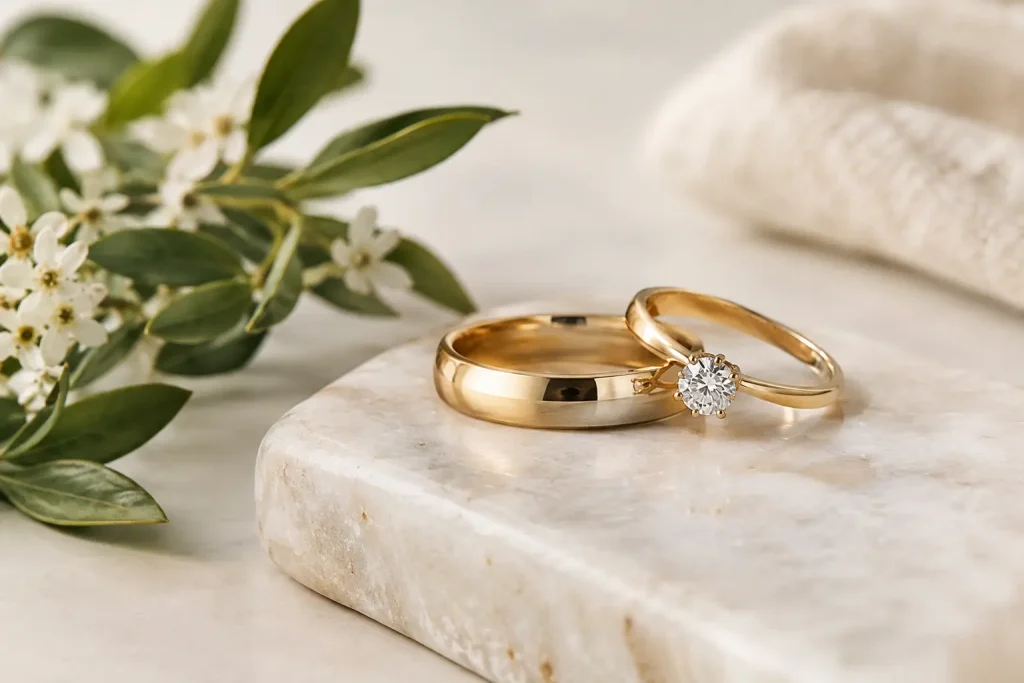
A wedding ring is one of the few things you will wear almost every day for the rest of your life. Choosing ethical jewellery means its story can feel as considered as the promise it represents – from where the metal and stones come from to the hands that shape them into something unmistakably yours.
For many couples, the question is not simply, “Is this ethical?” It is, “What does ethical mean for the ring we want?” The answer can look different depending on whether you are remodelling an heirloom, matching a diamond engagement ring, choosing a shaped wedding band, or designing both rings from the beginning. What matters is being able to ask clear questions, understand the options, and make a choice that feels right for you.
What ethical jewellery means when you are choosing rings
Ethical jewellery is not one single material, certificate or price point. It is a considered approach to sourcing and making jewellery. In practice, it may include recycled precious metals, responsibly sourced gemstones, transparent supply chains, fair treatment of workers, and craftsmanship that is built to last rather than be replaced.
For wedding and engagement rings, longevity deserves a place in that conversation. A beautifully made ring, designed around your lifestyle and properly cared for, can be worn for decades. A band that fits neatly beside your engagement ring, feels comfortable on your hand and reflects your own taste is much less likely to be left in a box because it never quite worked.
Ethics also includes the relationship behind the purchase. A consultation-led process gives you the space to talk through materials, budget, practical concerns and sentimental details without being rushed towards a standard design. You should feel comfortable asking where materials have come from and why a particular option has been recommended.
Start with the materials you will wear
The metal is the foundation of your ring, so it is often the most useful place to begin. Recycled gold and platinum are popular choices for couples who want to reduce the demand for newly mined material. Recycled metal is refined back to its pure form before being alloyed and crafted, meaning it offers the same beauty, strength and quality as newly mined metal.
The right choice is not only about the label. Think about colour, durability and how the wedding band will sit against an existing engagement ring. Yellow gold has a warm, traditional character; white gold offers a crisp, bright finish but may need occasional rhodium plating; platinum is naturally white, weighty and hard-wearing. Rose gold brings a softer tone, although its higher copper content may not suit every skin sensitivity.
If you already own family jewellery, remodelling can add another meaningful layer. An inherited ring may be melted and reused where appropriate, or its stones can be reset into a new design. This is a wonderful route when the original piece is not your style but its history matters deeply. It does need an expert assessment first: not every old stone or setting is suitable for reuse, and preserving a piece intact can sometimes be the more respectful choice.
Diamonds and gemstones: traceability matters
Diamonds are often discussed first in conversations about sourcing. A responsibly sourced natural diamond may come with information about its origin and supply chain, while laboratory-grown diamonds offer a different option with a known manufacturing route. Neither choice automatically answers every ethical question.
Natural diamonds can carry geological rarity and a particular emotional appeal, but the level of traceability varies. Laboratory-grown diamonds can be more accessible in price and avoid mining, although they still require significant energy to produce. If a lab-grown diamond is important to you, ask about the energy used in its production as well as its grading and quality.
Coloured gemstones call for the same curiosity. Sapphire, ruby and emerald supply chains can be complex, especially for smaller stones. A jeweller should be open about what can be verified and what cannot. Honest guidance is more valuable than a vague promise. It may mean choosing a stone with stronger provenance, selecting a recycled diamond, or deciding that a beautiful family stone is the most personal choice of all.
Questions worth asking your jeweller
You do not need to become a sourcing expert before you begin designing your rings. You simply need a jeweller who welcomes thoughtful questions and answers them clearly. When comparing options, ask:
- Is this gold or platinum recycled, and how is that confirmed?
- What do you know about the origin and traceability of this diamond or gemstone?
- Can an existing ring or heirloom stone be assessed for reuse?
- Who will make the ring, and how will it be finished and checked?
- What is the expected lifespan and care requirement for this design?
These questions are not a test with one perfect answer. Jewellery supply chains are international and detailed provenance is not available for every material. The important difference is transparency. A specialist should explain the limits of available information, rather than presenting broad claims as guarantees.
Bespoke design can be the more considered choice
Choosing a bespoke ring does not mean making something elaborate. Sometimes it means a simple plain band, made to the exact width, profile and finish that feels right on your hand. Sometimes it means creating a shaped band that follows the outline of your engagement ring so the two sit together comfortably, without an awkward gap or a forced fit.
This tailored approach can also help avoid wasteful compromises. Rather than buying a wedding band that looks suitable in a display case and later replacing it, you can begin with your engagement ring, your preferences and the way you use your hands. A contour can be adjusted, a setting can be considered from every angle, and the band can be made with enough depth for future resizing where possible.
Personal details have their place here too. An engraving of a date, a private phrase or a small symbol does not change a ring’s environmental credentials, but it can make the piece more likely to be treasured for life. Ethical choices are not only about materials. They are also about creating something you will genuinely keep, wear and pass on.
Balance your values with your budget
A ring budget should never make you feel that your values are out of reach. There are meaningful choices at many price points. Recycled gold may be a practical starting point; choosing a slightly slimmer band or a carefully selected smaller stone can free up budget for craftsmanship, fit and sourcing information.
It also helps to decide what matters most to you as a couple. You may care most about using inherited gold. You may prefer a laboratory-grown diamond so you can choose a larger centre stone. Or you may decide that a traceable natural diamond, paired with a simple recycled gold band, best reflects your priorities. These decisions are personal, and the best route is the one you understand and feel comfortable with.
Be cautious of language that sounds reassuring but says very little. Terms such as “eco-friendly” or “conflict-free” can be useful starting points, but they do not tell the whole story on their own. Ask for specifics, then weigh them against the quality, design and service you are receiving.
A ring with a story you can stand behind
At BWR London, the most rewarding part of a bespoke appointment is often seeing a couple realise they do not have to choose between a ring that looks beautiful and one that feels thoughtful. A reference image, an engagement ring you already love, or a piece of family jewellery can all become the starting point for a design made around you.
Bring your questions, your ideas and any existing rings to the conversation. The right wedding band should sit beautifully, feel comfortable and hold a story you will be happy to tell for years to come.