

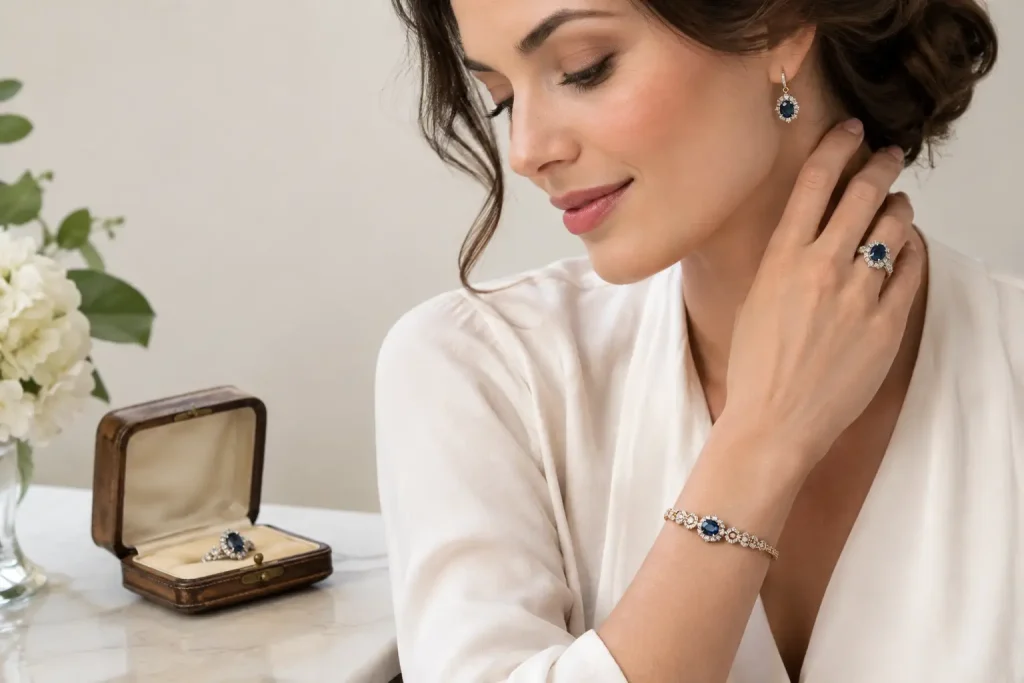
A ring tucked away in a jewellery box can hold far more than gold or gemstones. Heirloom jewellery may carry the memory of a grandparent, a much-loved relative or a family celebration, yet its original style may not suit the way you want to live and dress now. Remodelling it into a wedding ring or a piece you will wear every day can be a beautiful way to keep that connection close.
The key is not simply to melt down an old ring and start again. A thoughtful redesign respects what the piece means, considers what is physically possible, and creates something that feels wholly yours. For couples planning a wedding, it can also bring an extra layer of significance to the rings they exchange.
Start with the story behind the piece
Before considering sketches, stones or metals, take time to understand what you have. Who wore the ring? Is it known to have marked an engagement, anniversary or milestone? Are there relatives who feel strongly that it should remain unchanged? These conversations can shape the right decision just as much as the jewellery itself.
Not every inherited piece needs to be transformed. A delicate signet ring, an engraved band or an unusual antique setting may be most meaningful when preserved as it is. In other cases, a ring that has not been worn for decades becomes more valuable emotionally when it is made wearable again.
It is also worth photographing the original piece before any work begins. This creates a record of its first life and can be especially comforting if the design changes significantly. You might retain a recognisable detail, such as an engraving, a distinctive stone or a section of patterned gold, so the new piece still has a visible link to its past.
Assessing heirloom jewellery before redesigning it
An experienced jeweller should inspect the piece closely before promising a particular outcome. Older rings can have thin shanks, worn claws, hidden repairs or stones that are more fragile than they appear. Age does not automatically make a ring unsuitable for remodelling, but it does mean the design should be led by its condition rather than assumptions.
Gold is often adaptable, although its exact alloy and condition matter. Platinum behaves differently and may need to be worked separately. Some stones are ideal for resetting, while others need more careful handling. Diamonds are usually durable enough for a new setting, but emeralds, opals, pearls and older-cut gemstones can be more vulnerable to pressure, heat or daily knocks.
A practical assessment also confirms whether a stone is secure, whether it needs recutting or repolishing, and whether any hallmarks or inscriptions should be preserved. If the ring has sentimental value but is too fragile to wear, there may be a gentler solution: use one stone in a new design, incorporate a small amount of the metal, or take design inspiration from the original without dismantling it.
Choosing between restoration and remodelling
Restoration is the right route when you love the original design and want to strengthen it for regular wear. This could mean rebuilding worn claws, resizing the band, repairing a split shank or carefully cleaning the setting. It keeps the character of the original ring intact, although there can be limits to how much wear an antique piece can safely withstand.
Remodelling is more suitable when the piece does not fit your style, cannot be worn comfortably, or no longer suits its original purpose. A cluster ring, for example, may become a lower-profile engagement ring, a pendant, or a wedding band set with its original stones. A yellow-gold ring can sometimes become part of a mixed-metal design, allowing you to honour the old while choosing a finish you genuinely love.
Neither option is more respectful than the other. The best choice depends on the piece, the family story and whether you can picture wearing it often. Jewellery is made to be enjoyed, not simply stored away because you are worried about changing it.
Turning a family ring into a wedding band
For many couples, an inherited ring becomes especially meaningful when incorporated into a wedding band. It might provide the gold for a simple band, a hidden inner detail, or a small diamond set alongside a new engagement ring. This approach lets a family story sit naturally within a new chapter.
If you already have an engagement ring, the shape of the setting will guide the design. A straight wedding band works beautifully beside some rings, while others need a gentle curve, notch or more distinctive contour to sit neatly against the centre stone. A shaped-to-fit band can follow the profile of the engagement ring without forcing a gap between the two.
There is a balance to consider here. A wedding ring should complement the engagement ring, but it should also feel comfortable and beautiful on its own. You may occasionally wear your band without the engagement ring, particularly when travelling, exercising or working with your hands. Looking at the proportions, setting height and overall finish from both perspectives helps create a set that works in real life.
Details that make the redesign personal
The most moving designs are often not the most elaborate. A grandmother’s diamond set inside the band, a short engraving in the original owner’s handwriting, or a tiny section of preserved pattern can say more than a dramatic remake.
Consider what you want the new ring to communicate. Some clients want the inherited material to be clearly visible, while others prefer a private connection known only to them. A discreet stone on the inside of a wedding band, an engraved date, or a metal detail placed beneath the setting can make the story personal without changing the overall look you have imagined.
If several family members have contributed jewellery, using a small element from each can create a meaningful piece without making the design feel crowded. Good bespoke design is as much about restraint as it is about possibilities.
Questions to ask during your consultation
A consultation should leave you clearer, not overwhelmed. Bring the heirloom piece along where possible, together with any reference images that show what you are drawn to. It is helpful to discuss your budget early too, as this influences whether existing stones can be reused, whether additional diamonds are needed and how complex the setting can be.
Ask what can safely be retained, what may need to be replaced, and whether the original metal is suitable for the new design. If the ring is to sit alongside an engagement ring, ask to see how the two will meet. A made-to-measure design process should account for the exact dimensions of your ring rather than relying on a generic curve.
You should also ask how the sentimental material will be handled throughout the process. For a piece with family history, confidence comes from knowing that every decision is discussed and that the design will be checked before it is made. At BWR London, that one-to-one guidance is central to creating a ring that feels considered from the first conversation to the final fitting.
Give the finished ring a future, too
Once your redesigned ring is complete, keep a note of its story. Record whose jewellery was used, which stones were retained, and why you chose the final details. This does not need to be formal. A few lines tucked into a keepsake box can become part of the ring’s value for the next person who wears it.
Regular care matters as well. Have settings checked periodically, remove the ring for heavy manual work, and store it separately from other jewellery when it is not being worn. A bespoke ring is designed for a lifetime, but a little attention helps protect the craftsmanship and the memories held within it.
The most successful heirloom redesign does not try to recreate the past exactly. It allows a treasured piece to continue its story in a form that suits your hands, your life and the marriage you are about to begin.