

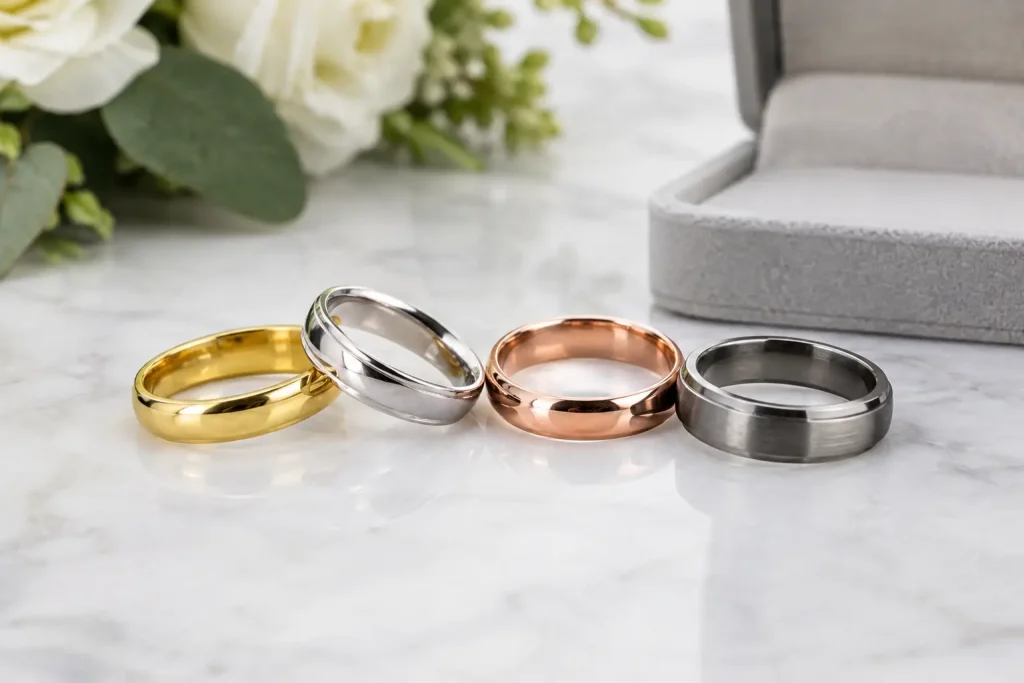
Your wedding ring may be one of the smallest things you wear on the day, but it will become part of almost every day afterwards. When you choose wedding metal, you are choosing more than a colour. You are deciding how the ring will feel, wear, age and sit beside an engagement ring that may already hold years of meaning.
For a bespoke wedding band, there is no single “best” metal. The right choice depends on your existing ring, your lifestyle, the shape you need and the finish you love. A thoughtful conversation at the beginning can prevent the common worry of receiving a beautiful ring that does not quite feel right once it is on your hand.
Choose Wedding Metal That Works With Your Engagement Ring
If you wear an engagement ring, its metal is the natural starting point. Many couples assume both rings must be made in precisely the same metal, but that is not always the case. Matching can create a wonderfully unified look, particularly when the rings are designed to sit closely together. Yet a subtle contrast can feel just as personal and intentional.
A yellow gold engagement ring paired with a yellow gold wedding band has a warm, classic harmony. The same is true of platinum with platinum, or white gold with white gold. This approach is especially helpful if your engagement ring has a slim shank, a delicate setting or a shaped profile, as the wedding band can appear as though it was always part of the original design.
Mixed metals can be equally beautiful. A platinum engagement ring with a yellow gold wedding band gives a gentle two-tone effect, while rose gold beside platinum can bring warmth to a cool-toned diamond setting. The key is proportion. If the metals are visibly different, consider whether the contrast feels deliberate across your other jewellery too, such as a watch, earrings or everyday chain.
There is also a practical reason to discuss the pair together. Metals differ in hardness and in how they wear against one another. A bespoke jeweller can assess where the rings touch, whether a fitted shape is needed and how to minimise unnecessary rubbing over time. This matters most with a low-set engagement ring, a large centre stone, an unusual setting or an heirloom piece.
Platinum: Naturally White and Reassuringly Durable
Platinum is a popular choice for wedding rings because it is naturally white, dense and enduring. It does not need rhodium plating to achieve its pale colour, so its appearance remains consistent as it is worn. Over time, platinum develops a soft satin-like patina rather than losing metal through ordinary surface wear.
It is an excellent option for those who work with their hands, prefer a substantial feel or want a metal that complements white diamonds particularly well. It is also often suitable for people with sensitivity to certain alloys, though individual allergies should always be discussed.
Platinum usually costs more than gold because it is denser and requires more material by weight. That does not mean it is automatically the right choice. A wider platinum band can feel noticeably weightier, which some people love and others find takes getting used to. Trying on different widths and profiles is invaluable here.
White Gold: Bright, Refined and Versatile
White gold offers a similar bright appearance to platinum at a different price point. It is made by combining gold with white-toned alloys, then often finished with rhodium plating for a crisp, polished white surface.
That rhodium finish may need refreshing eventually, depending on your skin chemistry and how you wear your ring. This is not a flaw, simply part of caring for white gold. Beneath the plating, the metal can have a slightly warmer or greyer tone, which becomes more visible over time.
White gold is a lovely choice for a band designed around a white gold engagement ring, particularly when you want a clean, contemporary look. If your ring needs a delicate shaped-to-fit curve, white gold can be an excellent material for creating refined details without overwhelming the engagement ring.
Yellow Gold: Warm, Timeless and Full of Character
Yellow gold has a richness that feels both traditional and current. It works beautifully with diamonds, coloured gemstones and vintage-inspired designs, and it can make a plain wedding band feel deeply considered without adding extra detail.
The two most common choices are 9ct and 18ct gold. An 18ct yellow gold ring contains a higher proportion of pure gold, giving it a richer colour and a more luxurious feel. A 9ct gold ring has less pure gold and more alloy metal, which can make it a practical choice for some budgets and lifestyles.
Neither is universally better. If you are drawn to that deep, buttery yellow and enjoy a slightly more precious feel, 18ct may suit you. If budget, durability and everyday practicality are higher priorities, 9ct can be a sensible and beautiful option. What matters is choosing a quality alloy and a design that suits how you will wear it.
Rose Gold: Romantic Without Being Overly Traditional
Rose gold gets its blush tone from copper in the alloy. It has a distinctive warmth that can make a wedding ring feel soft, romantic and individual, especially against fair, olive or deeper skin tones where its colour can really glow.
It is particularly striking with yellow gold details, champagne diamonds and antique-inspired engagement rings. If your engagement ring is white metal, a rose gold wedding band creates a noticeable contrast, so it tends to suit people who want the stack to feel personal rather than perfectly matched.
Because copper contributes to its colour, rose gold may not be the best choice for everyone with metal sensitivities. It is worth raising any history of skin irritation during your consultation, rather than choosing solely from photographs.
Consider Your Everyday Life, Not Just the Wedding Day
A mirror-polished ring under boutique lights can look very different after six months of school runs, gym sessions, gardening, cooking and commuting. Every precious metal will show signs of life. Fine surface marks are not evidence that a ring is poor quality. They are the natural record of a piece made to be worn.
The aim is not to find a metal that never changes, but one whose ageing process you are comfortable with. Platinum develops a gentle patina. High-polish gold can show fine scratches more visibly at first, while a brushed, matte or hammered finish can make everyday marks less obvious. A finish can be restored during professional care, but it is useful to choose one that already suits your expectations.
Your ring profile matters too. A comfort-fit band has a gently rounded inner edge and can feel particularly easy to wear, especially in wider styles. A flatter profile offers a more modern look, while a softly rounded court shape feels timeless. The same metal can feel completely different depending on its width, depth and finish.
If you rarely wear rings, do not dismiss that feeling. Start with a narrower sample or a comfort-fit profile, then gradually explore what feels natural. Your wedding band should not feel like something you need to tolerate because it looks good in a box.
Let Budget Shape the Design, Not Limit the Meaning
A bespoke ring gives you more choices than simply moving up or down in metal price. If platinum is your preference but a wide band is beyond budget, a slimmer profile, a considered finish or a refined shaped design may help you retain the material you love. If 18ct gold feels like the right emotional choice, the width and detail can be tailored to keep the ring comfortable financially as well as physically.
The same applies to engraving, diamonds and unusual contours. You may prefer to invest in a beautifully made plain band with a meaningful engraving inside, rather than choosing details that do not reflect you. A fingerprint, a short phrase, a wedding date or a tiny symbol can turn a simple metal band into something entirely yours.
Ethical sourcing should be part of the conversation as well. Ask where the materials come from and whether recycled precious metals are available. A wedding ring is symbolic by nature, and many couples find greater confidence in a choice that aligns with their values.
See the Metal Alongside Your Ring Before Deciding
Photographs are useful for collecting ideas, but they cannot show how a metal looks against your skin, how rose gold changes in different light or whether a platinum band sits neatly beneath your engagement setting. Bring your engagement ring to a consultation whenever possible. If you cannot visit in person, clear images from several angles and accurate measurements can still give a jeweller a strong starting point.
For shaped-to-fit bands, the existing ring should guide every decision. The curve, setting height, stone placement and band thickness all influence the final design. Forcing a straight band against an engagement ring that needs space can leave an awkward gap or create pressure where the rings meet. A carefully shaped wedding band can follow the outline naturally while still looking beautiful when worn on its own.
At BWR London, the process begins with listening to what matters to you: whether that is matching a treasured engagement ring, reworking a family idea, choosing an engraving or simply finding a band you will genuinely enjoy wearing. Bring your ring, your reference images and your honest questions. The right metal often becomes clear when you can see, feel and compare the possibilities side by side.