

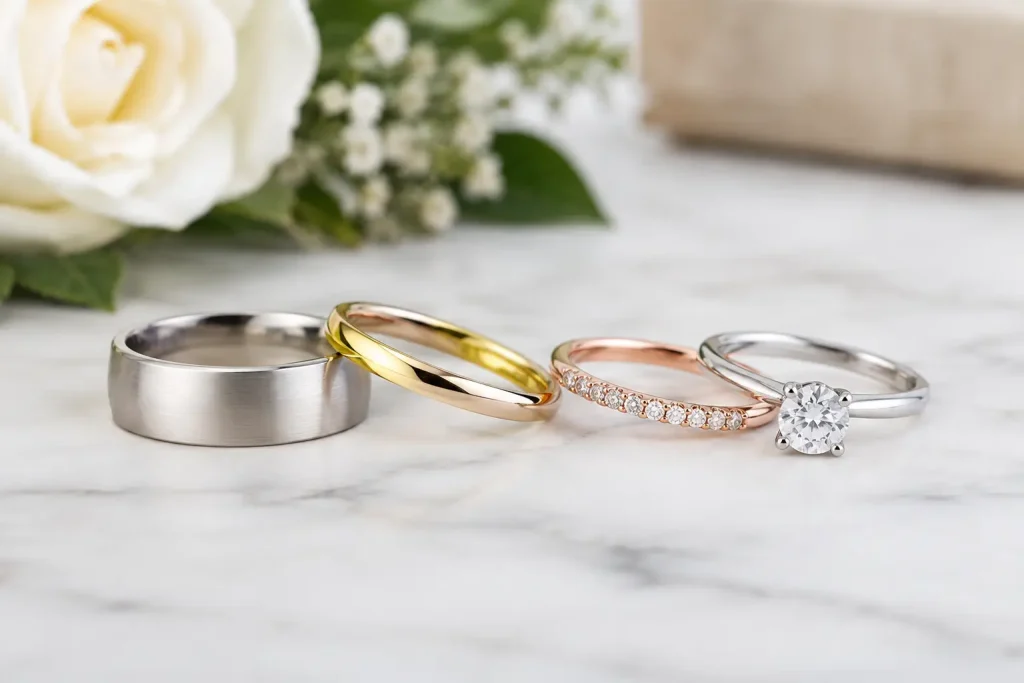
A wedding ring should become part of you – not the reason your finger feels itchy, red or sore by the end of the day. For anyone with a known metal allergy or easily irritated skin, choosing the best metals for sensitive skin is not a minor detail. It is central to creating a ring you can wear comfortably for decades.
The reassuring news is that a sensitive-skin-friendly ring can still feel entirely personal. Your preferred metal, the way the band sits beside an engagement ring, its profile and even its finish can all be considered together. A little informed guidance at the design stage can save a great deal of discomfort later on.
Why wedding rings can irritate sensitive skin
Most reactions are not caused by the precious metal named on the ring. They are caused by the alloy – the blend of metals used to make gold, platinum or silver suitable for jewellery. Pure gold is soft, so it is mixed with other metals for strength, colour and durability. Nickel is a common trigger for contact dermatitis, while some people also react to cobalt, copper or other alloying metals.
A reaction may show as dryness, itching, redness, tiny blisters or a darker mark beneath the ring. However, irritation is not always an allergy. Soap, hand sanitiser, moisturiser and water can become trapped under a close-fitting band, particularly during warmer weather. A ring that is slightly too tight can make this worse.
That distinction matters. If you have had a significant or persistent reaction, it is worth speaking to a pharmacist, GP or dermatologist. If metal allergy is already part of your history, tell your jeweller before a design is finalised. It gives you more choice, not less.
Best metals for sensitive skin in wedding rings
No metal can be called perfect for every person. Sensitivity varies, and the full alloy matters more than a label alone. These are the options most often worth discussing for comfortable, everyday bridal jewellery.
Platinum: a dependable choice for everyday wear
Platinum is often the first choice for clients with sensitive skin. It is naturally white, dense and typically very high in purity in fine jewellery. A platinum ring commonly contains 95% platinum, with the remaining percentage made up of carefully selected metals that strengthen it.
It does not need rhodium plating to maintain its white appearance, and it develops a soft, satin-like patina over time rather than wearing away. It is also wonderfully secure for stone-set engagement rings and matching wedding bands.
The trade-off is cost. Platinum is usually more expensive than comparable gold, and its density means it has a noticeably weightier feel. Some people love that reassuring substance; others prefer a lighter band. It is also not completely scratch-proof, although scratches tend to move the metal rather than remove it.
High-purity yellow gold: warm, classic and often kind to skin
Yellow gold can be an excellent option, especially in higher carats. A 22ct yellow gold ring contains more pure gold than an 18ct ring, while 18ct contains more than 9ct. In general, the more pure gold in the alloy, the less room there is for other metals that may cause a reaction.
That does not make every high-carat gold alloy automatically suitable. Its exact ingredients still matter, and softer high-carat gold may show marks more readily when worn every day. For many couples, 18ct yellow gold offers a lovely balance of richness, strength and comfort, provided it is made using an allergy-conscious alloy.
Yellow gold is particularly beautiful when you want warmth alongside a diamond engagement ring, or when an heirloom piece has inspired the design of your wedding band.
Palladium: lightweight and naturally white
Palladium belongs to the same metal family as platinum and is naturally white. It is lighter than platinum, which makes it appealing if you want a white metal ring without a substantial weight on the hand. It is also generally considered a strong option for people avoiding nickel.
Availability can be more limited than platinum or gold, and resizing may not be suitable for every palladium ring. This is worth thinking through before ordering, especially if your ring size has changed in the past or you are choosing a particularly intricate shaped band.
Titanium: practical, light and usually well tolerated
Titanium is lightweight, durable and commonly used for people with metal sensitivities. It can be a sensible choice for a simple wedding band, particularly for someone with an active job or who simply dislikes the feel of a heavy ring.
For bridal jewellery, however, titanium has limits. It is difficult to resize, can be challenging to repair, and is not normally the first choice for a delicate band designed to curve around an engagement ring. If your ring needs to fit precisely around a stone setting, a traditional precious metal may allow greater design flexibility.
Metals and finishes that need more careful consideration
White gold can absolutely be beautiful, durable and suitable for many people. Yet it deserves a more detailed conversation if you have sensitive skin. Its naturally warm-grey tone is often enhanced with rhodium plating to give it a bright white finish. Underneath, some white gold alloys may contain nickel, though nickel-free alternatives are available.
Rhodium itself is generally well tolerated, but plating gradually wears through with daily use and may need renewing. If the underlying alloy is the source of a reaction, symptoms can return as the finish wears. Ask specifically whether a white gold ring is nickel-free and what maintenance you should expect.
Sterling silver is often affordable and attractive, but it is not always ideal for a ring intended for permanent daily wear. It usually contains copper and can tarnish, react with skincare products or leave a temporary dark mark on the skin. For occasional jewellery this may be perfectly manageable. For a wedding ring, many people prefer the longevity and peace of mind of platinum or a carefully chosen gold alloy.
Gold-filled and plated rings are similarly best approached with care. Once the outer layer wears thin, the base metal beneath can come into contact with your skin. A wedding band is exposed to too much daily life for this to be a dependable long-term solution.
The alloy is as important as the metal
When comparing the best metals for sensitive skin, do not stop at asking, “Is this gold?” Ask what the alloy contains. A good jeweller should be able to explain the metal clearly and recommend an option around your needs, lifestyle and budget.
It can help to mention every reaction you have experienced, even if it was years ago or only happened with costume jewellery. Tell them whether earrings cause trouble, whether you react to watch backs, or whether a previous ring caused irritation after months of wear. These details can point towards a likely sensitivity and shape a more thoughtful recommendation.
If you already own a ring that you wear comfortably, that can be a useful reference too. Knowing its metal and carat may guide the choice for your new band, though it should not replace checking the proposed alloy.
Comfort comes from design as well as metal
The metal is only one part of the comfort story. A wedding band with a gently rounded inner profile, often called a comfort fit, can feel smoother against the finger than a completely flat interior. The width and thickness should also suit your hand and the way you use it every day.
For a shaped-to-fit wedding ring, careful measurements are especially valuable. A band that follows the outline of an engagement ring should sit close enough to look intentional without pressing awkwardly against the setting or trapping debris. This is where a bespoke process becomes genuinely helpful: the ring is made around your engagement ring, rather than asking you to make do with a standard shape.
Consider the finish too. A polished surface has a classic brightness, while a brushed finish can soften the appearance of small marks. Neither finish prevents an allergy, but choosing a finish you will be happy to maintain means you are less likely to put off the occasional professional clean and check.
A thoughtful way to choose your ring
Start with your skin, then move to the practicalities of the design. If you have a confirmed nickel allergy, platinum, palladium, titanium or a verified nickel-free gold alloy are sensible places to begin. If you have only occasional irritation, checking the fit, cleaning routine and products trapped beneath the ring may be just as useful.
At BWR London, a custom wedding band can be designed around the engagement ring you already love, while keeping your comfort and metal preferences firmly in view. Bring photographs, share your concerns and ask as many questions as you need. The right ring should feel considered from the first conversation – and effortless every time you look down at your hand.