

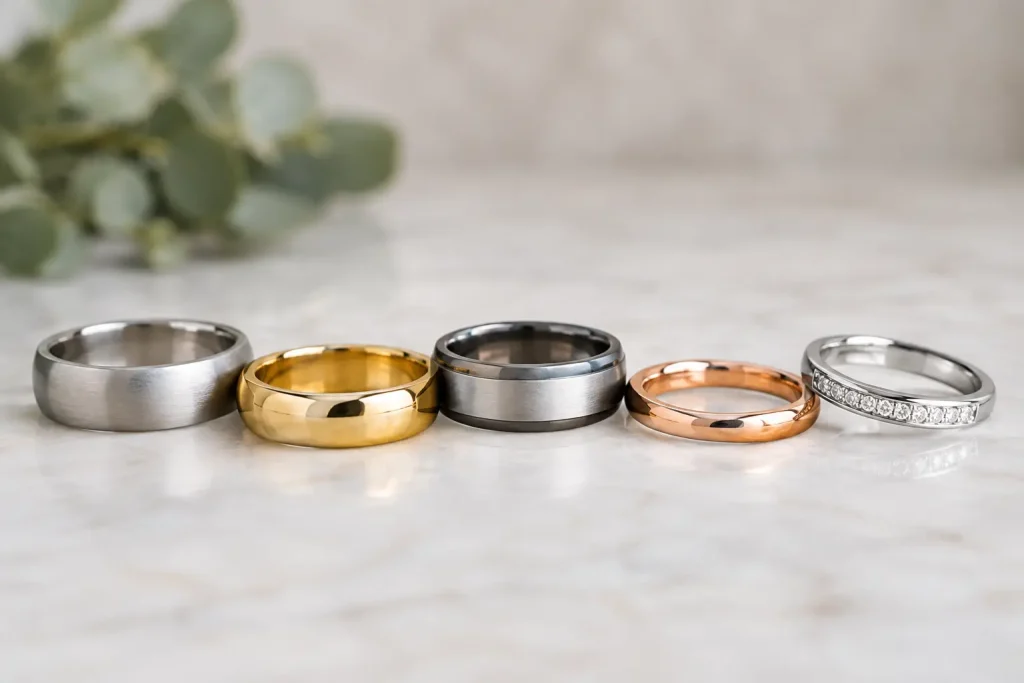
A wedding ring can look perfect in its box, then feel unexpectedly wrong after a full day of typing, cooking, commuting and everything else life brings. That is why choosing the best wedding band profiles is about far more than appearance. The profile determines how the ring feels between your fingers, how it catches the light, how substantial it appears and how naturally it sits beside your engagement ring.
For a ring you will wear every day, comfort deserves just as much attention as metal, width and diamond detail. There is no single profile that suits everyone, but there is usually one that suits your hand, your lifestyle and the story you want your rings to tell.
What does a wedding band profile mean?
A profile is the shape of a ring when viewed from the side or cut through the centre. It describes both the outer surface you see and, in many cases, the inner surface that rests against your finger.
Two rings can have the same metal, width and size yet feel completely different because of their profile. A rounded ring may feel softer and look slimmer, while a flat-edged ring can feel more architectural and appear wider across the finger. The depth of the ring also matters. A delicate 2mm band and a 2mm band with a deeper profile will have a very different presence.
When selecting a profile, it helps to think beyond the first impression. Consider how often you wear rings, whether you prefer a barely-there feel or a more noticeable piece of jewellery, and whether the band needs to sit closely against an engagement ring.
The best wedding band profiles to consider
Court profile: softly rounded and timeless
A traditional court profile is gently rounded on both the outside and inside. It has a smooth, classic look and is often chosen for its comfortable, easy-to-wear feel.
The rounded exterior gives the ring a soft, substantial appearance, even at narrower widths. It is a lovely choice if you are drawn to timeless wedding jewellery and would like a band that feels reassuringly tactile. Because there are no sharp edges, a court profile can also be especially comfortable for people who are not used to wearing rings.
Its softer shape means it may not sit as flush against some low-set engagement rings. That does not make it unsuitable, but it may mean choosing a shaped version or allowing a small, intentional gap between the two rings.
D-shape profile: classic from above
A D-shape band is rounded on the outside, with a flatter inner surface. From the side, it resembles the curved top of the letter D. This is a familiar and elegant silhouette that gives a traditional wedding ring a clean, polished finish.
Compared with a full court profile, the flat inner edge can make a D-shape feel a little more defined on the finger. Some people love this sense of structure; others prefer the extra softness of a rounded interior. It is worth trying or discussing both, particularly if comfort is a priority.
D-shape bands work beautifully alone and can look particularly balanced next to engagement rings with rounded shoulders or a classic solitaire setting.
Flat profile: modern and confident
A flat profile has a level outer surface and crisp edges. It offers a contemporary, understated look, especially in a brushed or satin finish. This profile is often chosen by couples who prefer clean lines over traditional curves.
A flat ring generally looks broader than a rounded ring of the same width because more of its surface is visible from above. That can be ideal if you want a strong presence without selecting an especially wide band. The trade-off is that sharp square edges can feel less forgiving than a rounded profile, particularly on wider rings.
For everyday wear, many clients choose a softened flat profile instead. This preserves the modern character while gently easing the edges for greater comfort.
Flat court profile: the best of both worlds
The flat court is one of the most versatile wedding band profiles. It has a flat or near-flat outer surface paired with a softly rounded inner surface. You get the contemporary appearance of a flat ring with the smoother fit associated with a court profile.
This can be an excellent option if you want a simple, modern band but are concerned that a fully flat profile may feel too angular. It is also a practical choice for wider bands, where a rounded inside can make a real difference to daily comfort.
The precise amount of rounding can be adjusted in a bespoke design. A subtle curve may suit someone who likes a defined profile, while a more generous comfort fit can be ideal for a ring that will be worn from morning until night.
Bevelled profile: defined edges, gentle detail
A bevelled wedding band has angled edges that lead into a flatter centre. It is a small design detail, but it adds depth and catches the light in a distinctive way.
This profile feels more detailed than a plain flat band without becoming ornate. It can suit a minimal engagement ring, especially where you would like the wedding band to have character in its own right. Bevelled edges can also make a wider ring feel less heavy visually.
As with all more structured profiles, proportions matter. A very deep bevel on a narrow band may look overly sharp, while a carefully balanced bevel creates a refined, tailored finish.
Matching the profile to your engagement ring
The profile of your wedding band should not compete with your engagement ring, but it does not need to be identical either. The aim is for the pair to feel considered when worn together.
If your engagement ring has a rounded shank, a court or D-shape wedding band often creates a harmonious pairing. If it has clean, flat edges, a flat court or bevelled band can echo those details beautifully. A delicate pavé engagement ring may suit a slim, softly rounded plain band, allowing the diamonds to remain the focal point.
The practical question is how the rings meet. A high-set engagement ring may allow a straight band to sit neatly beneath the setting. A low-set setting, prominent centre stone or unusually shaped shank may require a curved, notched or fully contoured wedding band. In these cases, the best profile is only part of the picture: the shape of the band must be designed around the engagement ring itself.
This is where a bespoke approach is particularly valuable. Working from photographs, measurements or the ring in person allows the curve, depth and profile to be tailored together, rather than hoping an off-the-shelf band will fit.
Width, depth and comfort are connected
It is easy to focus on width because it is the most visible measurement, but depth affects both comfort and durability. A very thin, shallow band can look delicate, yet may be less suitable for a highly active lifestyle or future resizing. A deeper ring feels more substantial, but can sit more prominently between the fingers.
Narrow bands around 1.5mm to 2mm often suit people who want a light, fine look. Medium widths of around 2.5mm to 4mm offer more presence and give room for engraving or subtle shaping. Wider bands can be striking and wonderfully personal, but benefit from a comfort-focused inner profile and carefully softened edges.
Finger shape matters too. A profile that feels wonderful on one hand may feel restrictive on another, especially if your knuckles are larger than the base of your finger. Your ring size can also change slightly with temperature, travel and everyday movement. A comfortable interior curve gives a little more ease through these natural changes.
Do not overlook the finish
The surface finish changes how a profile reads. A high-polish court band feels classic and luminous. A brushed flat band has a quieter, contemporary character. Hammered textures can bring warmth and individuality, while milgrain edging adds a delicate vintage touch.
If you are adding an engraving, remember that a more rounded inner surface may give less flat space for very long wording. This does not rule out engraving, but it is something to discuss at the design stage. A date, initials, a short phrase or a private symbol can all be planned around the ring’s proportions.
Finding a profile that feels like yours
The right profile is the one you will be happy to reach for every morning. It may be a traditional court band that feels immediately familiar, a flat court ring with a modern edge, or a carefully shaped design that nestles perfectly against an engagement ring no high-street display could accommodate.
At BWR London, the conversation begins with how you want the ring to feel as much as how you want it to look. Bring a reference image, share your engagement ring details or start with only a rough idea. With thoughtful proportions and a profile made for your hand, your wedding band can feel personal from the very first wear – and still feel right decades later.