

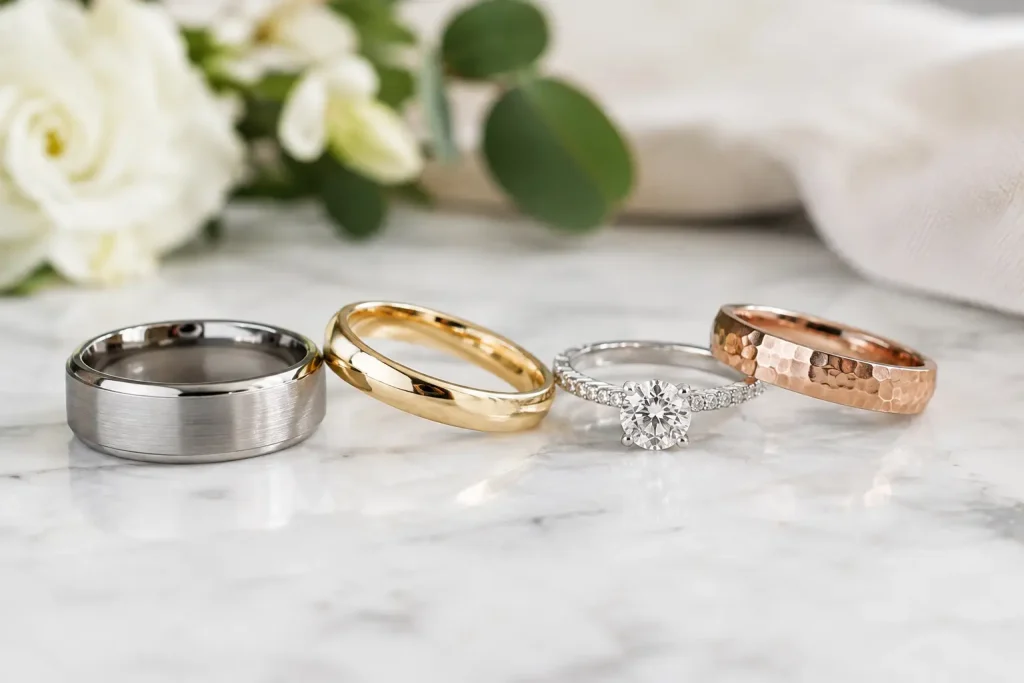
A wedding ring should become part of you in the nicest possible way – familiar, comfortable and full of meaning. If jewellery has ever left you with itchy, red or sore skin, choosing from the best hypoallergenic wedding metals deserves to be part of your ring design conversation from the very beginning. The right choice is not only about avoiding a reaction. It is also about finding a metal that suits your lifestyle, budget, engagement ring and the way you want your wedding band to look decades from now.
What “hypoallergenic” really means for wedding rings
Hypoallergenic does not mean that a metal can never cause a reaction. Skin sensitivities are personal, and the term is not a promise that applies equally to every wearer. In jewellery, the most frequent concern is nickel, which is often used in alloys to strengthen white gold and some other metals.
A precious metal is rarely completely pure in a wedding ring. Pure gold and platinum are soft, so jewellers add other metals to create an alloy with the strength needed for daily wear. That is why it is worth asking not just whether a ring is described as hypoallergenic, but exactly what it is made from.
For couples designing a made-to-measure ring, this is reassuring rather than restrictive. A bespoke process gives you room to select a suitable alloy, consider the profile against your finger, and make sure a shaped-to-fit band sits beautifully beside an engagement ring without compromising comfort.
The best hypoallergenic wedding metals to consider
Platinum: the classic choice for sensitive skin
Platinum is often the first recommendation for clients with known nickel sensitivity. It is naturally white, dense and highly durable, and quality platinum wedding rings are typically made with a high percentage of platinum alongside carefully selected alloy metals. It does not need rhodium plating to achieve its white colour.
Its weight is part of its appeal. Platinum feels substantial on the hand, which many people associate with a lifelong piece of jewellery. Over time, it develops a soft patina rather than wearing away quickly. That lived-in finish can be polished if you prefer a brighter look, but plenty of couples love the gentle character it gains.
There is a trade-off: platinum is usually more expensive than gold, and its density means it can cost more even for a slim wedding band. It is also important to confirm the particular alloy used, especially if you have a diagnosed metal allergy. A good jeweller will be happy to discuss this clearly before production begins.
Palladium: a naturally white precious metal
Palladium belongs to the same family of metals as platinum. It is naturally white, lightweight and usually a very good option for people avoiding nickel. It can offer a similar clean, silvery appearance to platinum with less weight on the finger.
For some designs, palladium is an excellent choice, particularly if you want a pale metal but do not enjoy the heft of platinum. However, availability and suitability can vary between workshops and ring styles. It is also less commonly used than platinum or gold, so resizing and future alterations may need more consideration. If your ring needs a very precise curve around an engagement-ring setting, discuss this early so the design and metal work together.
Yellow gold: often a gentle and practical option
Yellow gold can be a wonderful choice for sensitive skin, especially when made in an alloy chosen without nickel. Its warm colour complements vintage-inspired engagement rings, coloured gemstones and family heirloom diamonds beautifully. It also gives a wedding set a softer contrast if your engagement ring is platinum or white gold.
The carat matters. An 18ct yellow-gold ring contains more gold than a 9ct ring, while 9ct contains a greater proportion of alloy metals. Neither is automatically unsuitable, but if sensitivity is a concern, ask for the precise alloy composition instead of relying on the carat stamp alone. Higher-gold alloys are often a sensible place to begin, although durability, colour and budget should be considered together.
Yellow gold is also straightforward to engrave, refine and, in many cases, resize. For a couple planning a delicate band with a personal inscription, this makes it an especially versatile choice.
Rose gold: beautiful, but ask about the copper content
Rose gold gets its romantic blush from copper. Many people wear it comfortably, but it is not the safest default recommendation if you have had reactions to jewellery before. Copper sensitivity is less common than nickel sensitivity, yet it can still be relevant, and rose-gold alloys vary noticeably in colour and composition.
If rose gold is the metal you have always pictured, do not rule it out immediately. Speak openly about any previous reactions and ask whether an alternative alloy can be used. A bespoke ring is about finding the version that feels right for you, not settling for a colour at the expense of comfort.
Titanium and niobium: lightweight alternatives
Titanium is lightweight, strong and generally well tolerated. It is a useful option for someone who dislikes the feeling of a heavier ring or works with their hands and wants a low-maintenance band. Its cool grey tone has a modern, understated character.
The main consideration is that titanium is difficult to resize and can limit intricate bespoke work, such as fine engraving, delicate stone setting or a highly sculpted fitted shape. It may be ideal for a simple independent band, but less suitable where a close match to an elaborate engagement ring is essential.
Niobium is another metal known for good biocompatibility and can be anodised in subtle colours. It is less traditional for wedding rings and less commonly chosen for bridal sets, but it may appeal if skin sensitivity is severe and a conventional precious-metal ring has never felt comfortable.
Metals and finishes that need a closer look
White gold deserves a more detailed conversation than it often gets. Many white-gold alloys contain nickel, then receive rhodium plating for a bright white finish. The plating can create a barrier at first, but it gradually wears with daily use and needs renewing. If nickel is your trigger, rhodium plating alone is not a dependable long-term solution.
Nickel-free white gold is available and can be a strong choice, though it may have a slightly warmer, softer white tone beneath any rhodium finish. That is not a flaw – it is simply part of the metal’s character. It can be a lovely compromise for someone who wants the look of white gold without a nickel-containing alloy.
Be cautious with broad labels such as stainless steel, tungsten or mixed-metal rings. Their exact contents can differ significantly between suppliers, and some cannot be resized. They may suit certain budgets and styles, but for a ring intended to fit around a treasured engagement ring and be worn for life, clarity about the material matters.
Matching a hypoallergenic band to an engagement ring
Comfort and coordination should be considered side by side. You can wear a yellow-gold wedding band beside a platinum engagement ring, or pair a platinum fitted band with a white-gold engagement ring. Mixed metals can look intentional and personal, especially when the shape, finish and proportions have been designed as one set.
If your engagement ring has a low setting, prominent centre stone or unusual silhouette, a straight band may leave an awkward gap or press against the setting. A curved, notched or contoured band can be made to follow its shape closely. Choosing a hypoallergenic metal does not mean giving up that tailored fit – it simply means planning the construction carefully.
At BWR London, this begins with listening to how you wear your engagement ring, what has caused irritation in the past, and what details matter most to you. Reference images, measurements and even a much-loved heirloom can all help create a band that feels considered rather than off the shelf.
Questions worth asking before your ring is made
Tell your jeweller if you have had a confirmed allergy, eczema or unexplained irritation from watches, earrings or previous rings. Ask which metals are present in the alloy, whether white gold contains nickel, and whether a surface plating will need regular maintenance. These are sensible questions, not fussy ones.
It also helps to discuss your daily routine. A narrow platinum band may be perfect for one person, while another may prefer lightweight titanium or a more affordable nickel-free yellow gold. If you work with your hands, exercise frequently, use skincare products often or expect your ring size to change, those practical details can influence the best choice.
Choose the metal you can forget you are wearing
The ideal wedding ring should not demand your attention because it is uncomfortable. It should hold your memories, complement the ring you already love and feel reassuringly yours from the first fitting onwards. Start with your skin, be honest about the look you want, and let the final choice be guided by the specific alloy and craftsmanship behind the ring – not just the name of the metal.