

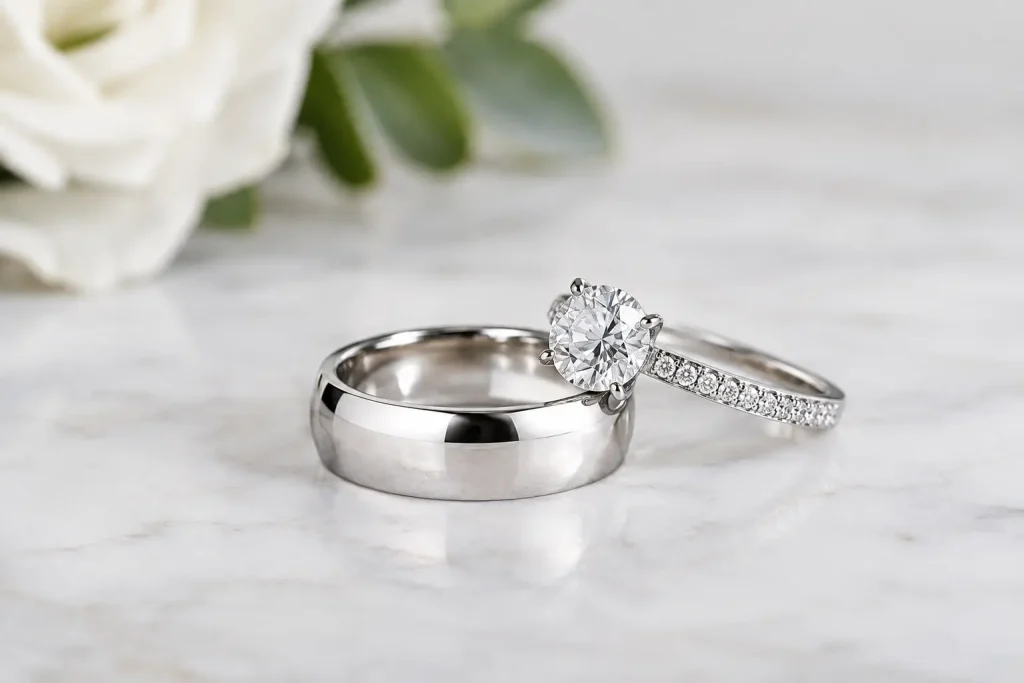
Your wedding ring may sit beside your engagement ring every day, rub against it, catch the light differently and quietly become part of your routine. That is why the question, is platinum good for wedding rings, deserves more than a quick yes or no. Platinum can be a beautiful, practical lifelong choice, but it needs to suit your design, your lifestyle and the way you want your ring to feel on your hand.
For many couples, platinum offers the reassuring combination of a naturally white colour, a satisfying weight and excellent long-term wear. It is especially worth considering for a bespoke wedding band shaped around an engagement ring, where precise craftsmanship and a lasting fit matter.
Is platinum good for wedding rings?
For most people, yes. Platinum is an excellent metal for a wedding ring because it is durable, naturally white and well suited to daily wear. It is also commonly used in high-quality bridal jewellery, particularly for rings designed to hold diamonds securely or sit neatly against an engagement ring.
In the UK, platinum wedding rings are usually made from an alloy containing 95% platinum, often marked 950. The remaining metals are added to make the material workable and suitable for jewellery. This high platinum content gives the ring its distinctive feel: cool, dense and noticeably heavier than gold.
That weight is one of the first things people notice during a consultation. Some love the substantial, reassuring presence of platinum. Others prefer a lighter band, particularly if they are not used to wearing rings. Neither preference is wrong. A wedding ring should feel like yours from the first fitting, not something you are waiting to get used to.
Its white colour stays true
Unlike white gold, platinum is naturally white. It will not need rhodium plating to maintain its colour, so there is no gradual reveal of a warmer-toned metal beneath the surface. This makes it a particularly harmonious choice beside a platinum engagement ring, or for anyone who loves a crisp, silvery-white appearance.
Platinum also works beautifully with diamonds. Its neutral tone does not add warmth to colourless stones, while its refined appearance suits everything from a simple court-shaped band to an intricately shaped wedding ring designed around a detailed engagement setting.
It develops a patina rather than losing its character
Platinum does scratch with everyday wear. A wedding ring meets door handles, gym equipment, cooking utensils, garden tools and the occasional hard knock. No precious metal is entirely mark-proof.
The difference is in how platinum responds. Rather than wearing away quickly, the metal is generally displaced, creating a soft satin finish known as a patina. Many people come to love this gentle, lived-in appearance because it makes the ring feel personal. If you prefer a brighter polish, a professional clean and refinish can restore shine.
A highly polished, wide platinum band will show surface marks sooner than a textured or brushed design. This is not a reason to avoid platinum, but it is useful to discuss your preferred finish before the ring is made. The right finish can make day-to-day wear feel far less precious and more enjoyable.
Strength, comfort and the design of a platinum band
Platinum has a reputation for strength, but wedding-ring durability is not determined by metal alone. The width, thickness, profile and details of the ring all matter. A very slim band with a deep curve will behave differently from a substantial flat band, even when both are made in platinum.
For a ring worn beside an engagement ring, this is particularly important. If your engagement ring has a low setting, prominent claws, an unusual silhouette or a shaped gallery, a straight wedding band may leave a gap or press uncomfortably against it. A custom-shaped platinum band can follow those contours closely while still being made with enough depth for comfortable daily wear.
Platinum is also an excellent choice for detailed bespoke work. It can be formed into gentle curves, fitted around an existing setting and finished with personal touches such as engraving, milgrain edges or carefully placed diamonds. The best design is not simply the closest possible fit. It should allow the two rings to sit together naturally without putting unnecessary pressure on either piece.
Comfort should lead the decision as much as appearance. A comfort-fit interior, where the inside of the band is gently rounded, can make a meaningful difference if you plan to wear your ring constantly. The density of platinum can make a narrow ring feel more substantial than you expect, so trying on a few profiles is valuable before settling on proportions.
Platinum and sensitive skin
Platinum is often a good option for people with sensitive skin because it is highly pure and generally hypoallergenic. However, jewellery alloys vary, and an individual sensitivity can never be ruled out completely. If you have reacted to metals before, mention it at the outset so the alloy and finishing choices can be considered with care.
The practical trade-offs: price, weight and maintenance
Platinum is usually more expensive than gold for a wedding ring. This is partly because it is dense: more metal is required to make the same-sized ring. The specialist skill involved in working with platinum can also affect the price, especially for a shaped-to-fit or stone-set design.
That higher initial cost may be worthwhile if you value its natural white colour, substantial feel and long-term appeal. But platinum is not automatically the best choice for every budget or every design. An 18ct yellow or rose gold wedding ring may be the more meaningful choice if it reflects your style, complements a family heirloom or allows you to invest more in a wider band or personal engraving.
It is also worth knowing that platinum rings can be resized, although the process depends on the design. A plain band is relatively straightforward. A fully engraved ring, an eternity-style band with stones around the finger, or a carefully shaped wedding ring needs more planning. Getting accurate sizing before making the ring is always preferable, particularly if you are choosing a fitted design.
Maintenance is uncomplicated but should not be ignored. Remove your rings for tasks involving harsh chemicals, heavy lifting or activities where they may take a direct impact. Have stone-set rings checked periodically, and arrange a professional clean if the setting begins to collect everyday residue. These small habits protect both your wedding band and the engagement ring it sits beside.
When platinum is the right choice for your wedding ring
Platinum tends to suit couples who want a naturally white metal, a premium weight and a ring made for decades of regular wear. It is especially compelling when your engagement ring is platinum, when diamonds are part of the design, or when you need a custom band that follows a distinctive shape.
It may be less suitable if you strongly prefer a warm yellow or rose colour, want the lightest possible ring, or would rather keep the overall cost lower. There is no hierarchy of sentiment between metals. The right wedding ring is the one that feels comfortable, reflects your relationship and works beautifully with the jewellery you already cherish.
For ethical peace of mind, ask about the origin of the metal and whether recycled platinum is available for your design. The story behind a ring matters, particularly when it is made to mark a commitment intended to last a lifetime.
A bespoke consultation gives you the chance to place the practical questions alongside the personal ones: how the band will sit with your engagement ring, whether you like the weight, what finish feels most like you, and which small details will make it unmistakably yours. At BWR London, that conversation is where a wedding ring begins – with careful listening, considered design and a ring made to be worn with confidence every day.