

Your wedding ring is made for real life: hand-holding, cooking, commuting, holidays and all the small moments in between. That is precisely why a thoughtful guide to wedding ring maintenance matters. Gentle, regular care helps your ring retain its finish, keeps stones secure and protects the personal details that made you choose a bespoke design in the first place.
A wedding band does not need to be kept in a box to stay beautiful. It simply needs to be treated with the same care you would give any treasured piece you wear every day. The right routine will depend on its metal, setting and shape, particularly if it has been made to sit closely around an engagement ring.
Know what your ring is designed to do
Before reaching for a polishing cloth or cleaning solution, consider your ring’s construction. A plain platinum or yellow gold band can usually cope well with daily wear, although it will naturally develop fine surface marks over time. These marks are part of a ring’s lived-in character, but they can be professionally polished if you prefer a brighter finish.
Diamond-set bands need a little more attention. Dirt, hand cream and soap can gather beneath stones, making them appear less lively and, over time, making it harder to notice a loose claw. Delicate designs, pavé settings, milgrain edges and very slim bands should be handled particularly gently.
Shaped-to-fit wedding rings also deserve care when they are taken on and off. Their curves are made to complement your engagement ring, not to be bent, forced or squeezed into position. Put both rings on carefully and avoid twisting one against the other. If they are worn as a set, check occasionally that they still sit comfortably together without rubbing in an unexpected place.
A simple weekly cleaning routine
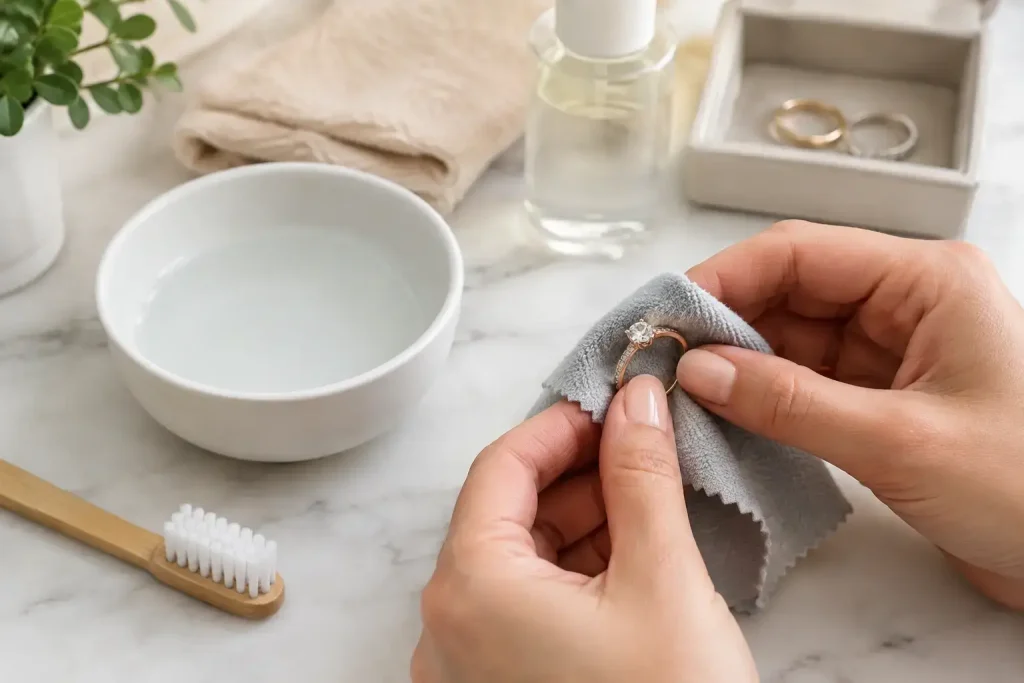
For most wedding rings, a soft clean at home once a week is enough to remove everyday build-up. Fill a small bowl with warm water and a little mild washing-up liquid. Leave the ring to soak for 10 to 15 minutes, then use a very soft toothbrush to gently clean around the inside of the band and underneath any stones.
Rinse thoroughly in clean water and pat dry with a lint-free cloth. Do this over a bowl rather than an open sink, and never use tissue, which can leave fibres behind. A soft jewellery cloth can restore shine to plain metal, but use it sparingly on textured, satin or oxidised finishes as vigorous rubbing may gradually change the intended surface.
Avoid toothpaste, bicarbonate of soda, household cleaners and abrasive powders. They are often suggested as quick fixes, but they can scratch precious metals, dull a carefully chosen finish or leave residue in stone settings. Ultrasonic cleaners are not automatically the best option either. They can be unsuitable for rings with fragile stones, older settings, enamel, pearls or stones with inclusions. If you are unsure, ask the jeweller who made your ring before using one.
Take extra care with stones beyond diamonds
Diamonds are exceptionally hard, but a diamond setting can still be damaged by impact. Other gemstones need more specific care. Sapphires and rubies are generally resilient, while emeralds, opals, pearls, turquoise and moonstones are more sensitive to heat, chemicals and knocks. Rings incorporating heirloom stones may have their own history and vulnerabilities, so a professional inspection is especially worthwhile.
When to take your ring off
There is no need to remove your wedding ring for every ordinary task. However, a few habits make a meaningful difference over years of wear. Take it off before using bleach, strong cleaning products or hair dye, and before applying heavy creams, fake tan or sunscreen. These products can create a film over stones and may affect certain finishes.
It is also sensible to remove it for gardening, DIY, weight training and contact sports. Gloves can help during cleaning and gardening, but rings can catch inside tight-fitting gloves, so taking them off remains the safer choice. Swimming is another time to be cautious. Cold water can make fingers shrink, increasing the risk of a ring slipping away, while chlorine may affect some alloys and finishes.
Store your ring somewhere deliberate when it is off. A fabric-lined ring box, a small dish kept in one reliable place or a zipped jewellery pouch is far safer than the edge of a sink or a pocket. Keep rings separate where possible, as diamond edges can scratch softer metals and polished surfaces.
Watch for small changes
The most useful part of wedding ring maintenance is noticing changes early. Run a fingertip lightly over the setting and listen for any tiny rattle when you hold the ring close to your ear. A stone should never move. Claws should not catch on knitwear, and the band should not feel suddenly thinner, rougher or misshapen.
Look closely at your ring in good light every month or so. Pay attention to gaps around stones, worn claws, dents, deep scratches and a change in how the ring sits alongside your engagement ring. If the band begins to spin constantly, feels tight or is difficult to remove, it may be time to discuss resizing. Finger size can change with weather, pregnancy, exercise, medication and many other everyday factors.
Do not wait for a stone to fall out before seeking help. A small adjustment is usually simpler than replacing a lost stone, particularly where a ring includes a sentimental or unusual gem.
Plan a professional check-up
Even the best at-home routine cannot replace a jeweller’s trained eye. For a stone-set wedding ring, an annual inspection is a sensible benchmark. A jeweller can check the security of claws and settings, assess wear on the shank, clean hard-to-reach areas and advise whether the ring would benefit from refinishing.
Plain bands can often be checked less urgently, but it is still worthwhile to have them reviewed every year or two, especially if they are thin, engraved or worn during hands-on work. Engravings can soften gradually through decades of wear. This is not a failure of craftsmanship – it is the natural effect of a much-loved ring meeting daily life. A specialist can explain whether re-engraving is appropriate without losing the character of the original detail.
Professional polishing should be considered carefully. It can make a ring look beautifully refreshed, but polishing removes a very small amount of metal. For that reason, it is best reserved for deeper scratching or when the finish no longer reflects your preference. If your ring was made with a brushed, hammered or matte surface, ask for that original finish to be preserved rather than polished to a high shine.
Caring for a wedding ring set
Many couples choose a wedding band that follows the contours of an engagement ring. This creates a close, considered pairing, but rings that touch can wear against one another over time. The effect depends on the metals used, the amount of contact and how active your hands are.
A jeweller can assess whether a slight adjustment, a protective spacer or a different wearing order would help. Do not attempt to alter the fit at home. Bespoke rings are designed around very precise proportions, and even a small change can affect comfort and alignment.
If you wear your rings together every day, give them an occasional rest from one another while cleaning. Inspect the contact points and the underside of each ring, where scratches and trapped product are most likely to develop. Taking a few minutes to do this can preserve the considered silhouette that made the set feel so personal.
Keep a record of the details
Take clear photographs of your rings when they are newly made and keep any valuation, gemstone details and design notes in a safe place. Update your insurance valuation periodically, particularly if precious metal or gemstone values have changed. These records are practical, but they also preserve the story of your rings: the shape chosen to fit, the engraving inside, the heirloom stone remade for a new chapter.
At BWR London, we believe a bespoke wedding ring should be enjoyed rather than worried over. Wear it fully, care for it gently and ask for expert help when something does not feel quite right. A ring made around your life deserves maintenance that fits around it too.